
ALLIANCE COMMENTARY
Alliance Welcomes New Board of Directors Members
The Alliance is proud to welcome two new members to our Board of Directors. We are grateful for their commitment to the international exchange community and look forward to working together to protect and promote exchange programs.
Matt Buczek
CEO
International Exchange of North America
Matthew Buczek is the CEO of International Exchange of North America (IENA), where he leads the organization’s work connecting international participants with cultural exchange and summer camp opportunities in the United States. He has built a career at the intersection of international exchange, education, and the U.S. summer camp industry.
Matt has more than two decades of experience in the summer camp sector, beginning as a camp counselor and progressing through leadership roles including Maintenance Director and Camp Director. He previously served as Director of Camping Services at Frost Valley YMCA and as Camp Director at Stonybrook Day Camp, gaining extensive experience in camp operations, staffing, and program development.

Elizabeth kumbhari
President, Cultural Exchange
Vanteo
Elizabeth Kumbhari has spent more than 20 years in international exchange, global education, and immigration. She started as an exchange student and overseas intern, and those experiences still drive her work. She believes that moving people across borders builds understanding, opportunity, and stronger communities.
Elizabeth is President of Cultural Exchange at Vanteo, a leading partner for international hiring, global workforce mobility, and cultural exchange. She leads Vanteo's J-1 teacher, intern, and trainee programs, which bring international educators and young professionals to communities across the United States. She also oversees Arkansas Global Connect, Vanteo's H-2B program.
Before Vanteo, she held senior roles across the exchange and global mobility field. As General Counsel and Vice President of Professional Exchange Programs at Cultural Vistas, she oversaw the organization's J-1 program. She directed the international offices at Long Island University and Northern Kentucky University. She also held leadership roles at Amazon, most recently as Business Advisory Lead for Canada and Latin America and served as Vice President of Client Management for Americas Immigration at Newland Chase. She founded Go Global Immigration, PLLC, a U.S. corporate immigration law firm.
Elizabeth holds a Doctorate in Organizational Leadership and Learning (EdD) from Vanderbilt University, where her research looked at what makes expatriate assignments succeed at Global Fortune 500 companies. She earned her Juris Doctor from Northern Kentucky University and is licensed to practice law in Ohio and Washington, D.C.
She is active in nonprofit leadership as Board Chair of WERC and a member of the Board of Directors of The Letter Project. She previously served as Secretary of the Board at Global Ties U.S. She is also a Contributing Author and Member of the Forbes Business Council.
Introducing the 2026 McCarry Leadership Awardees
Get to know the 2026 McCarry Leadership Awardees.

Madeline Keating
Senior Program Specialist, AFS-USA
Madeline Keating is a Senior Program Specialist at AFS-USA. In this role, she oversees recruitment, selection, and on-program participant support for the Youth Exchange and Study (YES) program across a portfolio of countries in South and Southeast Asia. Since joining the organization as an intern in 2018, Madeline has contributed to many of AFS-USA’s international and domestic programs, including the Future Leaders Exchange and American Leadership Experience programs.
Madeline became passionate about international education through her participation in the U.S. Department of State’s Congress-Bundestag Youth Exchange (CBYX) program. She expanded her appreciation for intercultural learning while earning her BA in European and Mediterranean Studies from New York University in Italy, New York, and the Czech Republic.
“I am so honored to receive the McCarry Leadership Award, and I am grateful to the Alliance for this meaningful recognition. My own exchange experience transformed my worldview, and I feel so fortunate to play a role in creating impactful intercultural experiences for this generation of students. Working in the international exchange field has given me the opportunity to see the power of these experiences from a new perspective, and I am excited to continue learning, growing, and contributing to this field alongside my fellow McCarry Leadership Awardees.”

Shelbey Keegan
Associate Director, Center for Global Leadership, Meridian International Center
Shelbey Keegan is an Associate Director at Meridian International Center, where she oversees the Center for Global Leadership’s initiatives for multinational emerging and mid-career leaders, including the ECA Study of the U.S. Institutes (SUSI) and U.S. Congress – ROK National Assembly Exchange Program. Her work focuses on building the capacity of rising global leaders to amplify their impact and creating pathways for sustained alumni engagement. With a decade of experience in globally focused nonprofits, Shelbey is grateful for the opportunity to learn from thousands of visitors from around the world and to collaborate with inspiring colleagues at Meridian, university partners, ECA, and other exchange organizations. Her own participation in international exchange as a Fulbright English Teaching Assistant in Taiwan has shaped her belief that deeper understanding, and therefore stronger leadership, grows through human connection.
“I am deeply grateful to the Alliance and Meridian for their support and honored to be named a 2026 McCarry Leadership Award recipient. International exchange and education abroad have been instrumental in shaping my professional journey, and I am privileged to spend my day-to-day supporting emerging leaders at pivotal moments in their development while fostering meaningful community. I look forward to continuing to learn from the Alliance network, advocating for these important programs, and amplifying our collective impact.”

Gabby Stall
External Affairs Associate, Global Ties U.S.
Gabby Stall is an External Affairs Associate at Global Ties U.S., where she works with the 70+ member organizations of the Global Ties Network as they implement a wide variety of international exchange and public diplomacy programs. Her work supports Network advocacy, external events, and editorial content that highlight the positive impact of international exchange programs in communities across the United States and their role in advancing U.S. foreign policy priorities. Gabby joined the Global Ties U.S. team full-time in 2025 after serving as a Communications Intern. Originally from Dallas, Texas, Gabby's connection to the Global Ties Network began as an intern with the World Affairs Council of Dallas/Fort Worth, a Global Ties U.S. Community-Based Member organization. Here she witnessed firsthand the impact of international exchange at the community level. She earned a master's degree in Global Communication from The George Washington University and a bachelor's degree in International Studies from the University of North Texas.
“It is an honor to be selected as a 2026 McCarry Leadership Award recipient. Having witnessed the impact of international exchange firsthand, from my local community to the global stage, I am continually inspired by its power to foster mutual understanding and strengthen relationships across cultures. I am excited for the opportunity to learn from my peers, further develop my skills as an exchange professional, and connect with others who share a deep commitment to the transformative impact of these programs.”
Action Alert: Write Congress to oppose $70M rescission of Department of Education international funding
On September 24th, 2026, the Office of Management and Budget (OMB) sent a legislative request asking Congress to rescind nearly $70 million in federally appropriated FY26 funds for Department of Education international education programs, known as Title VI. While these rescissions do not impact Department of State international exchange programs, rescinding these funds will have a significant negative impact on the United States’ ability to compete globally and prepare our students to succeed on the world stage.
action alert
On September 24th, 2026, the Office of Management and Budget (OMB) sent a legislative request asking Congress to rescind nearly $70 million in federally appropriated FY26 funds for Department of Education international education programs, known as Title VI. While these rescissions do not impact Department of State international exchange programs, rescinding these funds will have a significant negative impact on the United States’ ability to compete globally and prepare our students to succeed on the world stage.
Title VI programs award grants to U.S. colleges and universities to build our national capacity in foreign languages and international studies. These programs build the U.S.’ global expertise by helping to develop a pool of experts in foreign languages, area studies, and international relations to address U.S. economic, diplomatic, and security priorities. Title VI supports instruction and resources in strategic foreign languages that are critical to national security and less commonly taught in U.S. universities. The program elevates the global competence of American students, who go on to support U.S. competitiveness in international business and industry.
Contact your Senators and Representative today through the Joint National Committee for Languages’ (JNCL-NCLIS) call to action and tell them you oppose the rescission of these critical international education funds that support U.S. students and universities.
Background and responses
Prior to the end of the fiscal year, an active solicitation for these Title VI funds, under the newly named “Centers Aligned with Areas for National Need (CAANN) Program,” was underway.
This rescissions request puts all of that in jeopardy. The fact that the request was introduced so close to the end of the fiscal year and Congress is out of session until mid-November made it so they were unable to take any legislative action on the rescission request.
Despite this, there has already been a flurry of legislative and legal pushback. Members of Congress on both sides of the aisle objected to this “pocket rescission.” Senate Democrats introduced a bill to invalidate the rescission request, trying to expedite passage through a unanimous consent agreement, though that effort was blocked on the Senate floor. Almost simultaneously, seven state attorneys general filed a lawsuit in federal district court in Northern California objecting to the rescission of Title VI funds and the funds from the other programs included in the rescission request.
While the resolution of this matter is unclear, our commitment to supporting Department of Education international programs is not. The Alliance will continue to track it closely and support our colleagues at JNCL-NCLIS and beyond in their work to advocate against this rescission.
Judge blocks DHS from implementing final rule ending Duration of Status
On September 14, 2026, the U.S. District Court granted a nationwide preliminary relief halting the implementation of the Department of Homeland Security’s (DHS) final rule ending Duration of Status (D/S). The court blocked the DHS rule, set to take effect on September 15, citing concerns about the government’s rationale for the final rule and its claimed need to safeguard national security.
On September 14, 2026, the U.S. District Court granted a nationwide preliminary relief halting the implementation of the Department of Homeland Security’s (DHS) final rule ending Duration of Status (D/S). The court blocked the DHS rule, set to take effect on September 15, citing concerns about the government’s rationale for the final rule and its claimed need to safeguard national security.
This preliminary relief stems from litigation brought forward, last month, by a coalition of associations and unions led by Alliance member, NAFSA: Association of International Educators. The coalition’s lawsuit included a complaint and a motion for preliminary injunction challenging DHS’s final rule ending D/S. It argued that the final rule violates the American Procedure Act since the agency did not properly weigh the cost and benefits, respond to public comment, consider less burdensome alternatives, or justify the rule based on its objectives.
Now that the motion for a preliminary injunction has been granted, what does this mean for D/S going forward?
The preliminary relief is an indefinite pause on the implementation of DHS’s final rule ending D/S. This means the Duration of Status framework remains in place throughout the country while the legal process moves forward. The next court date is scheduled for October 2, 2026.
That October 2 date should not be treated as the preliminary relief’s expiration date, as the relief is designed to halt the final rule while the entire legal process plays out.
The federal government is expected to appeal this decision.
To learn more about the preliminary relief, the legal challenge, and DHS’s final rule ending D/S, visit NAFSA’s website and/or Presidents’ Alliance on Higher Education and Immigration’s website.
Call to Action: Help Shape the Future of BridgeUSA Programs
The Alliance for International Exchange needs your help collecting data for our BridgeUSA Impact Report.
This report is a one-of-a-kind major effort to document the experiences, outcomes, and lasting impact of U.S. Department of State BridgeUSA programs. The report will provide a clearer picture of what these programs mean for participants, hosts, employers, communities, and the U.S.
The Alliance for International Exchange needs your help collecting data for our BridgeUSA Impact Report.
This report is a one-of-a-kind major effort to document the experiences, outcomes, and lasting impact of U.S. Department of State BridgeUSA programs. The report will provide a clearer picture of what these programs mean for participants, hosts, employers, communities, and the U.S.
If you participated in a BridgeUSA exchange program or hosted a J-1 exchange visitor on the Au Pair, Camp Counselor, High School, Intern, Summer Work Travel, Teacher, or Trainee Program between 2021 and 2025, your experience can help tell that story by completing our impact survey.
Every response adds another perspective to the report. The more responses we receive, the more meaningful and representative the findings will be.
Each program survey (see list and links below) takes only 10-15 minutes to complete. All responses will remain confidential and will be analyzed only in aggregate with responses from other alumni or hosts within your program.
Program Surveys
Au Pair:
Camp Counselor:
High School:
Intern/Trainee Program:
Summer Work Travel:
Teacher Program:
Thank you for sharing your experience and helping us advocate for the future of BridgeUSA programs. Please contact info@alliance-exchange.org with any questions.
America celebrates Exchange Day 2026
Exchange Day 2026 was celebrated throughout the United States, spanning from rural Midwest communities, mountain towns, southern coasts and major metropolitans. These examples represent the power exchanges have in showcasing American innovation, education, and opportunity within a vast range of communities. To demonstrate this power, we’ve highlighted some of this year’s celebrations.
Exchange Day was launched in 2014 as an opportunity to showcase international exchange programs, share their benefits within communities across the United States, and champion American excellence on the world stage. This year's celebrations did just that.
Exchange Day 2026 was celebrated throughout the United States, spanning from rural Midwest communities, mountain towns, southern coasts and major metropolitans. These examples represent the power exchanges have in showcasing American innovation, education, and opportunity within a vast range of communities. To demonstrate this power, we’ve highlighted some of this year’s celebrations.
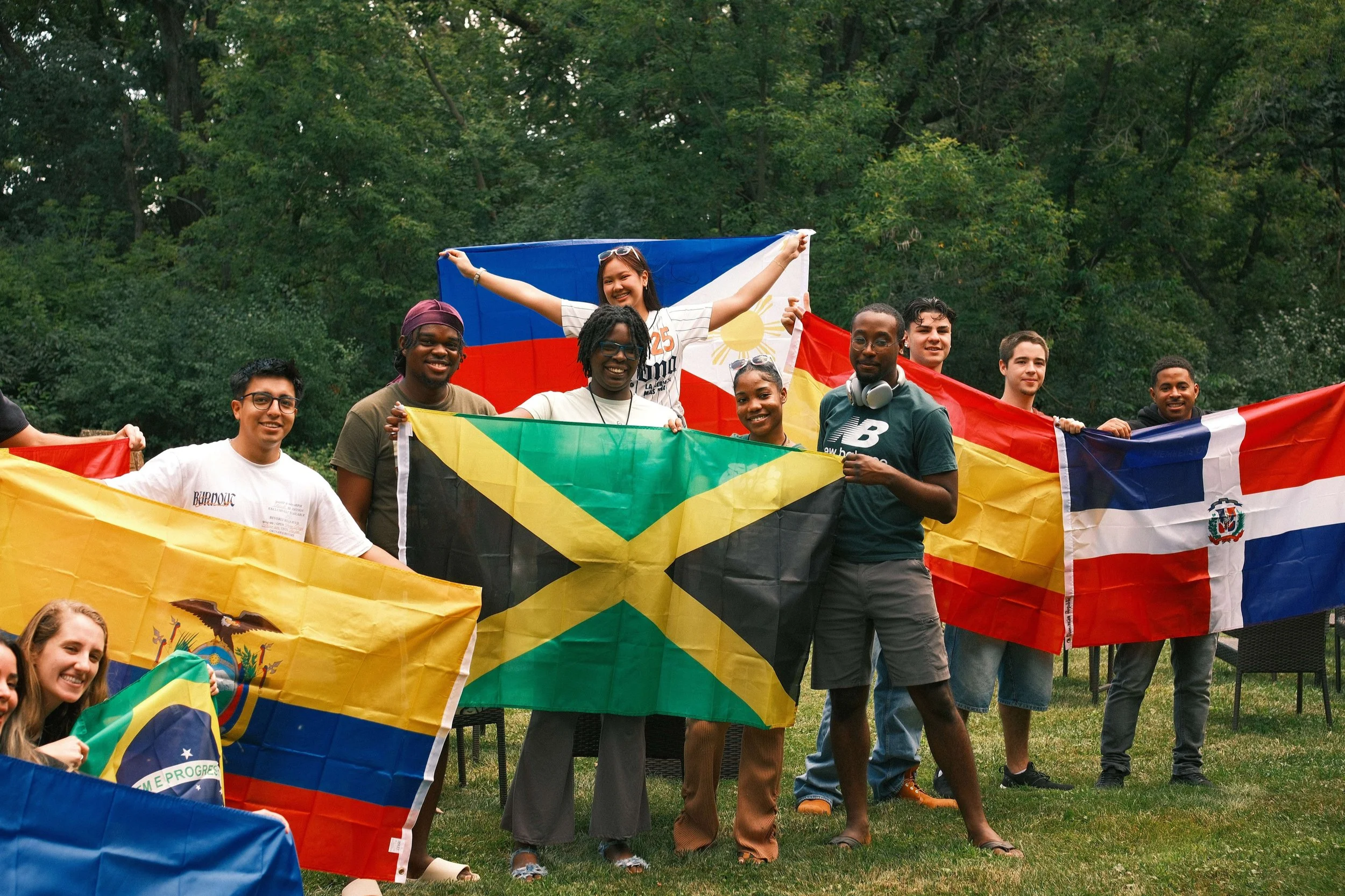
Walworth, Wisconsin
Odyssey International Group and Spirit Cultural Exchange celebrated the Summer Work Travel and Intern/Trainee communities during the “Exchange Day World Cup” event at Lake Geneva Hospitality Academy in Walworth, Wisconsin. Throughout the day, they celebrated cultural exchanges through an afternoon of friendly competition and bringing participants together from across the Lake Geneva area. As part of the “Give” component of Exchange Day, Grand Geneva Resort & Spa organized a blanket-making activity benefiting Lakeland Animal Shelter, a valued community partner that has supported many local host companies over the years.
———
Wisconsin Dells, Wisconsin
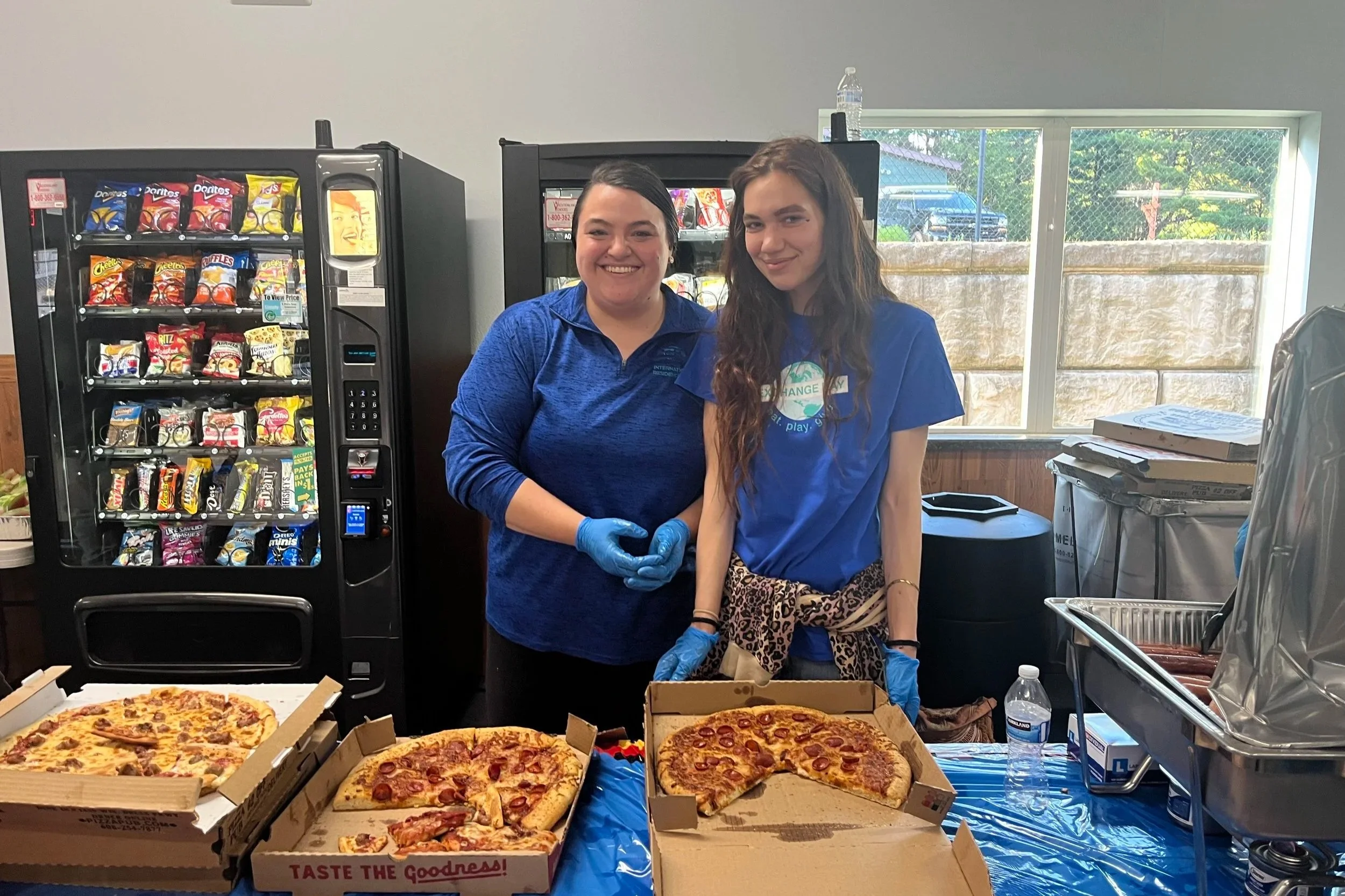
International Residence Hall’s (IRH) Wisconsin Dells community held a block party featuring a dunk tank, fun games, great food, and amazing prizes. The event allowed them to connect with the community and celebrate the bonds made through the Summer Work Travel program.
———
Pigeon Forge, Tennessee
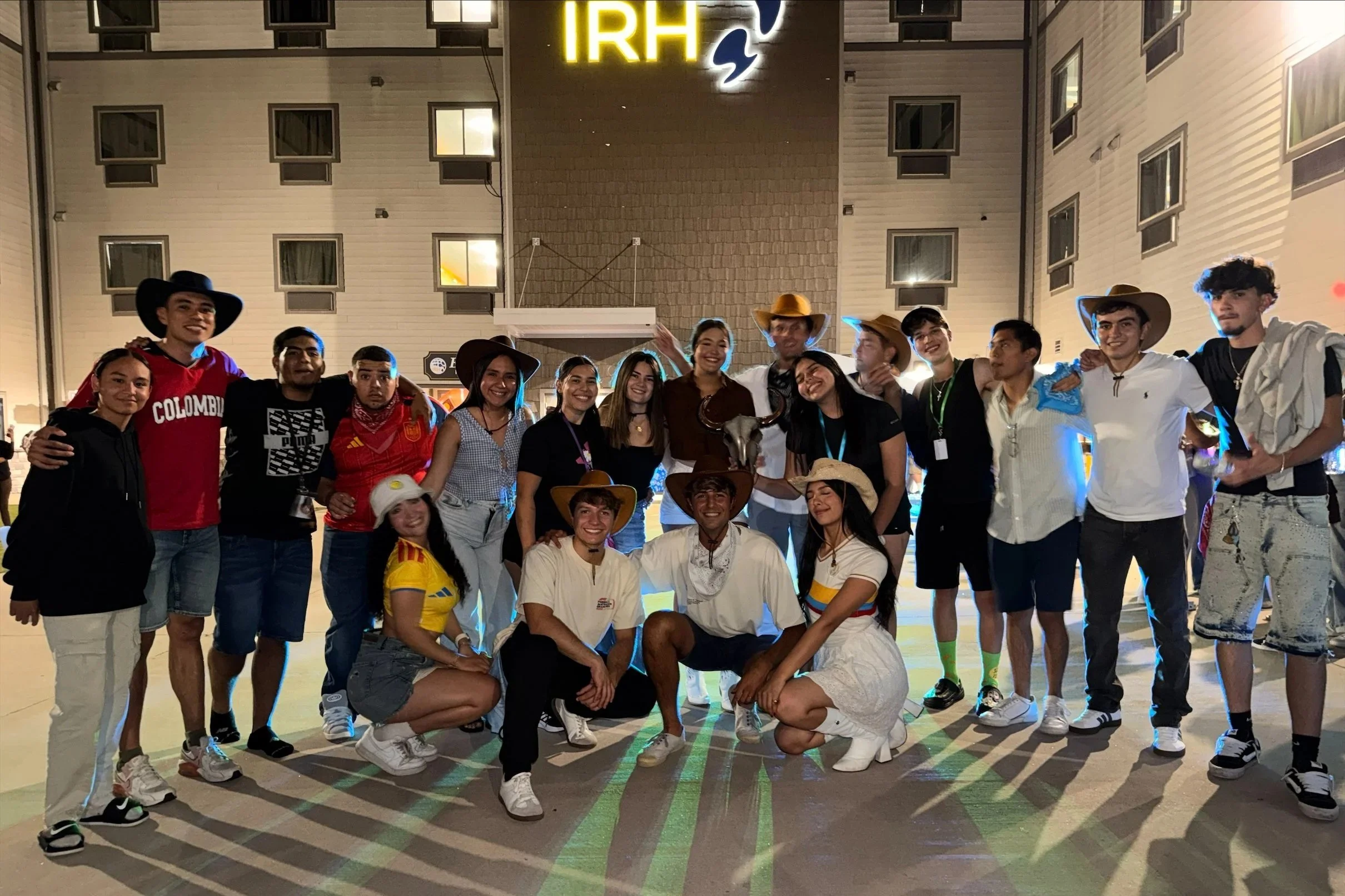
The Pigeon Forge community hosted a rodeo-themed celebration to get into the Exchange Day spirit. IRH teamed up with Orange Hospitality to bring a little piece of Tennessee to their residents with an unforgettable country rodeo-themed celebration including a mechanical bull, a delicious fried chicken dinner and square dancing. The celebration was a night full of fun, laughter, and cultural connection.
———
Foley, Alabama
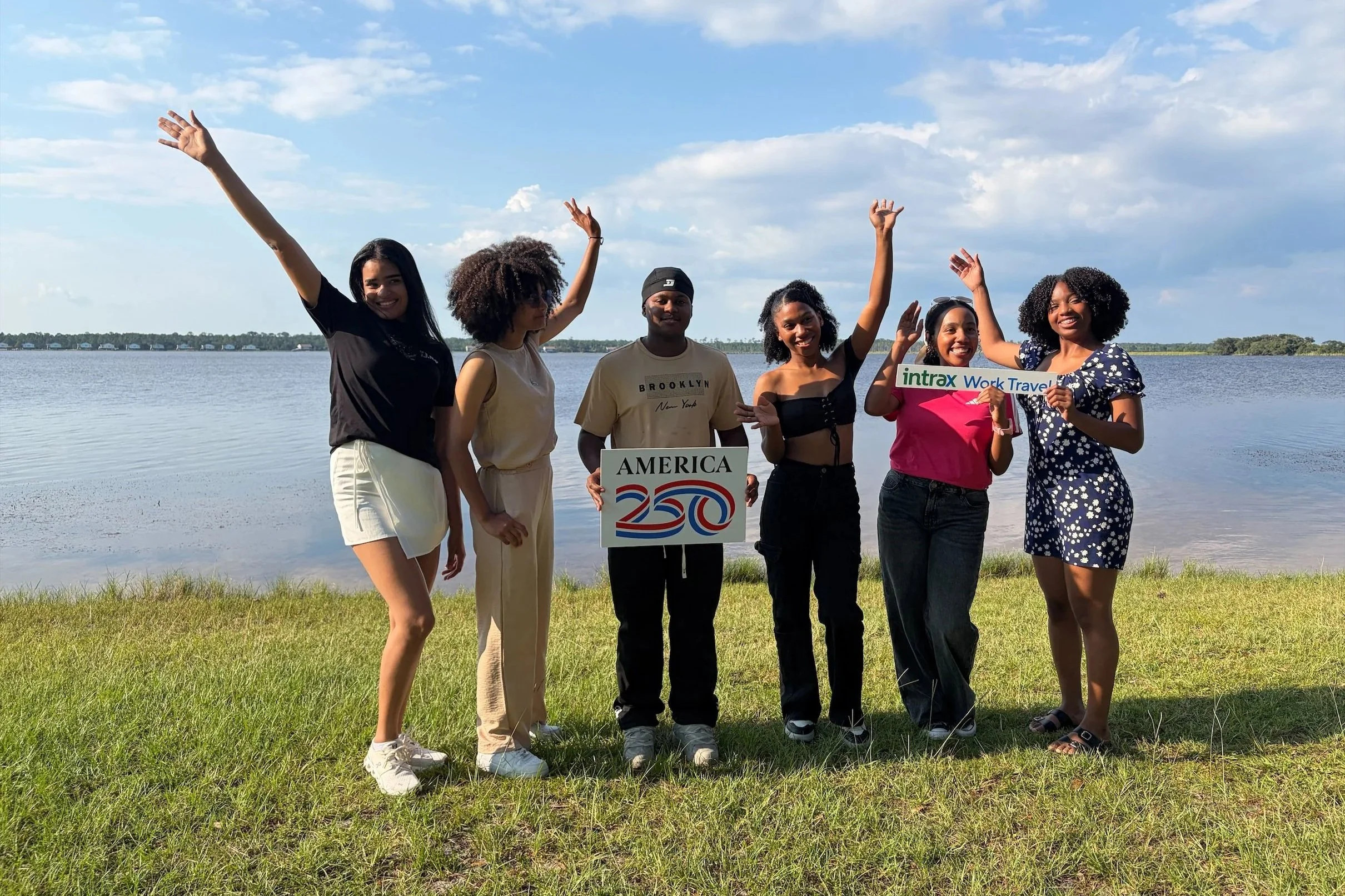
In Foley, Alabama, IRH residents enjoyed a picnic by the water. During the event, participants celebrated the global connections that strengthen South Baldwin by connecting with fellow students and the local community while enjoying good food and fun activities.
———
Myrtle Beach, South Carolina
IRH’s Myrtle Beach, South Carolina, location spent the day at Myrtle Waves Water Park enjoying exhilarating rides and building connections. As part of the “Give” component of Exchange Day, entrance fees to the event were donated to Myrtle Beach Boys and Girls Club.

———
Port Clinton, Ohio
Port Clinton and Lake Erie Islands Support Group, along with InterExchange and Spirit Cultural Exchange, hosted an Exchange Day event with 70 exchange visitors in attendance and volunteers from Shores and Islands, The Rotary, and Kiwanis Clubs. During the celebrations, St John's Lutheran Church taught exchange visitors how to make flowers with pipe cleaners which were then delivered to people in nursing homes within the area. Also, in attendance to show support for exchanges was Ashley Aston, Deputy Director for Northwest Ohio region in Senator Jon Husted’s office and Mayor of Port Clinton, Mike Snider.

———
Estes Park, Colorado
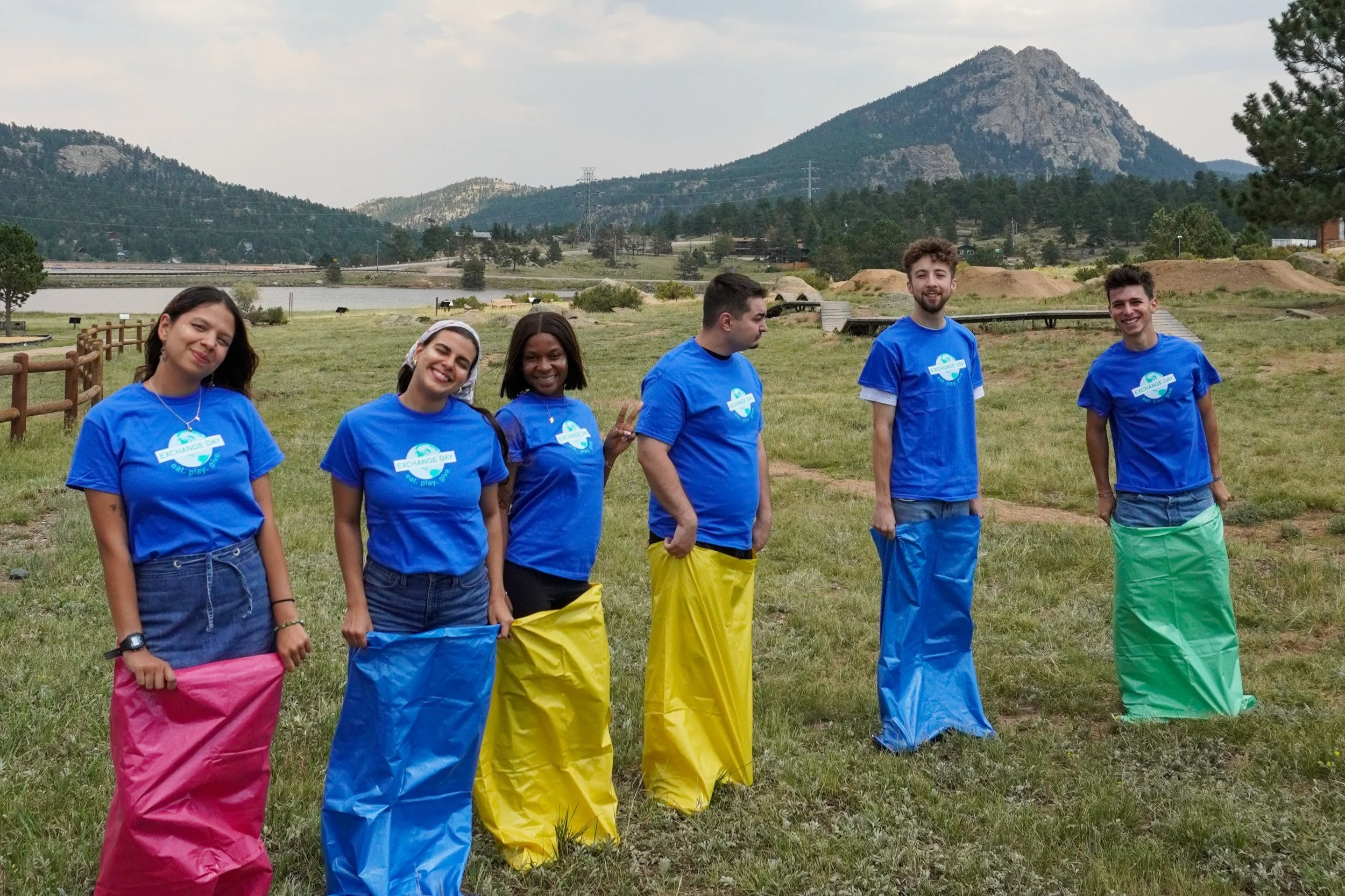
The Estes Park Community Support Group’s (CSG) Exchange Day brought together exchange visitors from nine countries, host employer representatives, visa sponsors, community members, the Chamber, and the mayor to celebrate the personal and professional growth of BridgeUSA participants and the positive social and economic impact they have on the Estes Park, Colorado, community. The event featured an American picnic-style BBQ, field day games with local souvenir prizes, and friendship bracelet making to bring joy to hospitalized children through the Confetti Foundation.
———
Orlando, Florida
LifeTRAVELED hosted exchange visitors at Andretti Indoor Karting & Games in Orlando, Florida, for an afternoon centered around giving back, connecting, and having fun together. As part of the “Give” component of Exchange Day’s #EatPlayGive mission, exchange visitors donated school supplies that will be provided to a local school. For the “Play” portion, participants enjoyed pizza and drinks before taking part in friendly indoor go-kart races to compete for the fastest lap, followed by arcade games.

———
These Exchange Day 2026 events and many others across the United States provide an opportunity for everyone involved in exchange programs to celebrate its impact in their lives, give back to the local community, and share American culture with participants from around the world. Celebrations like these remind us of the benefits that exchanges bring to American communities and that Exchanges are America.
What to Know About ECA’s Guidance Directive on the Elimination of Duration of Status
The Department of State’s Bureau of Educational and Cultural Affairs (ECA) released a directive this week providing BridgeUSA-specific guidance to help program sponsors and participants navigate the Department of Homeland Security’s (DHS) rule eliminating Duration of Status (D/S), scheduled to go into effect on September 15. The impact of this directive on J-1 exchange programs is two-fold: first, it outlines a process by which many J-1 participants will not to be required to go through DHS’ new Extension of Stay (EOS) process, but rather can continue using existing program extension methods; and second, it notes that current J-1 exchange visitors admitted under D/S will not be required to go through the EOS process if sponsors add an Expected Completion Date to their SEVIS record by September 15.
Overview:
New guidance from the Department of State’s Bureau of Educational and Cultural Affairs (ECA) is now available regarding the implementation of the new regulation eliminating Duration of Status (D/S). The guidance provides additional information on how the rule will apply for individual J-1 BridgeUSA programs.
For many J-1 programs, participants will not be required to go through a new Extension of Status (EOS) process if an Expected Completion Date is included on the exchange visitor’s DS-2019 in addition to the initial Program End Date.
Any program that extends beyond four years will be required to go through the EOS process.
Current J-1 exchange visitors admitted under D/S will not be required to go through the EOS process if sponsors add an Expected Completion Date to their SEVIS record by September 15.
(This analysis is up-to-date as of August 13, 2026 and will continue to be updated as more information regarding the guidance directive becomes available)
The Department of State’s Bureau of Educational and Cultural Affairs (ECA) released a directive this week providing BridgeUSA-specific guidance to help program sponsors and participants navigate the Department of Homeland Security’s (DHS) rule eliminating Duration of Status (D/S), scheduled to go into effect on September 15. The impact of this directive on J-1 exchange programs is two-fold: first, it outlines a process by which many J-1 participants will not to be required to go through DHS’ new Extension of Stay (EOS) process, but rather can continue using existing program extension methods; and second, it notes that current J-1 exchange visitors admitted under D/S will not be required to go through the EOS process if sponsors add an Expected Completion Date to their SEVIS record by September 15.
Background on the elimination of Duration of Status (D/S)
For decades, J-1 exchange visitors have been admitted to the U.S. for “Duration of Status” (D/S), allowing them to remain in the country for the length of their authorized exchange program, as reflected in SEVIS and on their DS-2019 form. Under DHS’ final rule released last month, however, exchange visitors will be given fixed periods of admission and a new process for obtaining a program extension when needed. Participants would have to file an Extension of Stay (EOS) petition with the U.S. Citizenship and Immigration Services (USCIS) to extend their program on top of coordinating with sponsors and the State Department. This would add additional costs, administrative requirements, and potential processing delays to program extensions that sponsors and the State Department currently successfully manage through the existing ECA system.
ECA’s guidance directive this week provides more explanatory information on how this new rule will impact BridgeUSA programs and how sponsors can prepare accordingly. Here are the important takeaways from and questions to consider when it comes to this guidance.
———
What ECA’s guidance means for sponsors and participants
The guidance instructs sponsors to enter the program begin and end dates on the DS-2019 form based on the participant’s initial program terms, as is current practice. Sponsors are then instructed to enter an "Expected Completion Date" in the Subject/Field Remarks (Field 4), if the expected date of completion is longer than the initial program dates. Doing this indicates to DHS and Customs and Border Patrol (CBP) that they should provide an Admit Until Date (AUD) that is longer than the initial program dates. Receiving this longer AUD means that a participant would need to go through the existing program extension process with the State Department, but would not be required to complete DHS’ new EOS process.
For example, an au pair is eligible to enter the U.S. for an initial 12-month program that can be extended for up to an additional 12 months. Under this guidance, an au pair’s DS-2019 form would have an initial program begin and end date of 12 months. The DS-2019 could also have an expected completion date in Field 4 of 24 months. CBP would then issue the au pair an AUD of 24 months, which would mean the au pair would only need to apply for an extension with the Department of State as is current practice, and would not be required to engage in the DHS EOS process.
It’s important to note that, based on this guidance, some J-1 programs will still be required to go through DHS’ EOS process. Any program that extends beyond four years will still have to go through the EOS process. For example, a Teacher Program participant can do an initial program of three years, with the option to extend two additional years. Since this program would extend beyond four years, following the new EOS process would be required.
Similarly, if a research scholar or professor plans to do a full five-year program, the sponsor can issue their DS-2019 form for the full five years – but the participants will only be admitted for four years and would need to go through the EOS process in order to stay for a fifth year.
———
What questions remain
A key question remains as to how this guidance will be implemented at the border when exchange visitors enter the country. The Department of State has confirmed that DHS will issue guidance to all CBP officers instructing them to look at Field 4 for an expected completion date and issue an AUD that reflects that date.
However, as the guidance makes clear, this approach remains subject to the discretion of individual CBP officers. The guidance states that “DHS will use the Program End Date listed on the Form DS-2019 as the primary guide for determining the AUD,” before presumably reviewing Field 4 to determine whether a different expected completion date is listed. This creates potential for error if a CBP officer overlooks Field 4 or misinterprets the information.
The guidance’s FAQs also clearly say that DHS is not required to issue an AUD based on the expected completion date:
“DHS may consider the Expected Completion Date when determining an AUD, but DHS retains ultimate authority over that determination and may decline to grant the Expected Completion Date based on other factors, such as the exchange visitor's passport expiration date. The period of admission cannot exceed four years, regardless of the Expected Completion Date entered on the Form.”
Thus, the practical impact of this guidance will become clearer once exchange visitors begin entering the country after September 15 and there is sufficient evidence that CBP officers are applying the guidance as intended.
———
What this means for BridgeUSA Programs
This guidance from ECA recognizes the unique parameters that each BridgeUSA program operates in and provides greater clarity on how the new admission rule will apply across all programs.
This is an important step toward minimizing unnecessary disruption for exchange visitors and program sponsors and ultimately supporting the success of BridgeUSA programs going forward.
We’ll continue to update this commentary as more information regarding the guidance and its implementation becomes available.
Senate CR extends government funding through December 2026, halts rule revising Uniform Guidance
On Saturday, August 8, 2026, the Senate passed their version of a Continuing Resolution (CR). This resolution extends Fiscal Year (FY) 2026 government funding through December 11, avoiding a government shutdown at the end of the Fiscal Year on October 1. It does not, however, impact FY27 funding levels or language.
On Saturday, August 8, 2026, the Senate passed their version of a Continuing Resolution (CR). This resolution extends Fiscal Year (FY) 2026 government funding through December 11, avoiding a government shutdown at the end of the Fiscal Year on October 1. It does not, however, impact FY27 funding levels or language.
The Senate’s bill differs from the one passed by the House in July. Most importantly, the Senate’s CR adds language (Section 157) that would prevent the implementation of a rule proposed by the Office of Management and Budget (OMB). This rule significantly changes Uniform Guidance, providing the administration with greater control over federal grants, by allowing federal agencies to have broader authority to cancel existing grants and reject new ones. This language, if passed, would only prevent the implementation of OMB’s rule, through December 11.
Because the Senate’s bill is different than that of the House’s, the House must accept the Senate’s version, or the two chambers will need to come to a compromise. The House of Representatives will likely take up this issue immediately upon their return from recess on August 31.
5 Reasons to Register for the 2026 Alliance Annual Conference
Registration for the 2026 Alliance Annual Conference is now live!
Five Reasons You Should Attend the 2026 Alliance Annual Conference
Tackle uncertainty together. The international exchange community is stronger when we come together, and this year has been no exception. The Annual Conference is a unique opportunity at this inflection point for our community for exchange professionals from across the field and U.S. to come together to reflect and look forward.
Engage directly with Department of State senior leadership. Senior leaders from the Bureau of Educational and Cultural Affairs (ECA) and Consular Affairs will be present throughout the conference, discussing the latest on policy and programming and networking with attendees.
Hear from industry thought leaders. We’ll be joined by policy and program experts to take stock of where we stand, prepare for the future, and get inspired.
Grow in your work. Concurrent breakout sessions will enable attendees to work collaboratively to share best practices and work on issues directly impacting exchange programming today.
Connect with passionate exchange professionals like yourself. One of the best things about the Annual Conference is the incredibly knowledgeable, driven, and forward-thinking exchange leaders and professionals who attend! Ample networking opportunities allow attendees to build their networks and learn from their peers.
Ready to join us? Email info@alliance-exchange.org for more information.
McCarry Leadership Award – 2026 Call for Nominations
We are excited to announce this year’s launch of the McCarry Leadership Award – an initiative promoting the professional development of emerging leaders in the U.S. exchange community. The award honors former Alliance Executive Director Michael McCarry and serves as an opportunity for our community to champion emerging exchange leaders who will be crucial to the advancement and success of international exchange programs.
We are excited to announce this year’s launch of the McCarry Leadership Award – an initiative promoting the professional development of emerging leaders in the U.S. exchange community. The award honors former Alliance Executive Director Michael McCarry and serves as an opportunity for our community to champion emerging exchange leaders who will be crucial to the advancement and success of international exchange programs.
If you’re an early career professional who works at an Alliance member organization and is looking for opportunities to gain leadership experience, or supervise an early career professional who exhibits leadership potential and a commitment to the exchanges field, we encourage you to review the award information and submit a nomination package by Friday, August 21.
Awardees receive the following:
Complimentary admission to the Alliance Annual Conference.
Up to $1,000 reimbursement will also be provided for actual travel expenses associated with the Conference.
Complimentary admission to Advocacy Day the following year.
Candidates should meet the following criteria:
Have at least three years of experience in the international education and exchange field. This can include experience as an exchange participant and volunteer work in the field.
Demonstrate significant leadership potential
Be employed by an Alliance member organization
Be 35 or younger
Please contact info@alliance-exchange.org with any questions.
DHS finalizes rule ending Duration of Status for F, J, and I nonimmigrants
Nearly a year after the proposed rule’s release, the Department of Homeland Security (DHS) finalized its regulation ending the longstanding Duration of Status (D/S) framework for F, J, and I nonimmigrants. The final rule, published in the Federal Register on July 17, 2026, creates a fixed admission period for exchange visitors and international students and establishes a new USCIS extension process for those visa holders who need additional time to complete their programs.
Nearly a year after the proposed rule’s release, the Department of Homeland Security (DHS) finalized its regulation ending the longstanding Duration of Status (D/S) framework for F, J, and I nonimmigrants. The final rule, published in the Federal Register on July 17, 2026, creates a fixed admission period for exchange visitors and international students and establishes a new USCIS extension process for those visa holders who need additional time to complete their programs.
The final rule closely mirrors the framework proposed last August, and the Alliance’s concerns remain largely unchanged. Specifically, we are concerned that the rule will add unnecessary complexity, increase costs, and create greater uncertainty throughout the extension process for all parties involved.
The rule is scheduled to take effect on September 15, 2026, following the required Congressional review period. Keep an eye on this space for more information on final rule implementation, specifically how it relates to J-1 BridgeUSA programs.
House passes FY27 funding bill, rejects amendment to eliminate Fulbright funding
Yesterday, the House approved the FY27 National Security, Department of State, and Related Programs (NSRP) appropriations bill, sending its funding proposal for the Department of State and exchange programs to the Senate in a major step forward for the appropriations process. The bill includes topline FY27 funding for educational and cultural exchange programs at $647 million and did not include an amendment that would have eliminated funding for the Fulbright Program.
Yesterday, the House approved the FY27 National Security, Department of State, and Related Programs (NSRP) appropriations bill, sending its funding proposal for the Department of State and exchange programs to the Senate in a major step forward for the appropriations process. The bill includes topline FY27 funding for educational and cultural exchange programs at $647 million.
Notably absent in the final bill was an amendment proposed by Representative Lauren Boebert (R-CO, 4) to eliminate funding for the Fulbright Program. Though the amendment’s inclusion in the bill was unlikely, its defeat is a significant win for the exchange community and signals the program’s continued strong bipartisan support in Congress. Over 2,800 advocates sent 3,116 messages to their Representatives urging them to vote no on the amendment and highlighting how important the Fulbright Program is to Americans and their communities.
Congress listened. 348 Representatives voted against the amendment, and the Chairman and ranking member of the NSRP appropriations subcommittee stood to voice their support for the program during debate. NSRP Committee Ranking Member Lois Frankel (D-FL, 22) called the program a “smart investment” and “one of the most well-established and prestigious programs in the world.” NSRP Committee Chair Mario Diaz-Balart (R-FL, 26) deemed Fulbright the “crown jewel” of exchange programs, sharing that he heard directly from several of President Trump’s ambassadors in South America that the program is a valuable U.S. national security tool.
Now that the House appropriations bill has passed, what’s next for FY27 exchange funding? All eyes are on the Senate, where their version of the appropriations bill is still in the works. We are hopeful that the Senate’s version of the bill will come closer to the Alliance’s request of $700.95 million and provide the robust oversight measures and earmarks we saw in the FY26 enacted legislation. The process is far from over, and every step matters. Follow the Alliance for the latest updates on FY27 exchange funding and ways you can help promote and protect the future of exchanges.
House amendment to FY27 State Department appropriations bill seeks to eliminate funding for Fulbright Program
On June 17, 2026, Representative Lauren Boebert (R-CO, 4) introduced an amendment (Amendment 1 to HR 8595 (#110 (Boebert))) to the House Fiscal Year 2027 (FY27) Department of State funding bill that seeks to eliminate funding for the Fulbright Program.
On June 17, 2026, Representative Lauren Boebert (R-CO, 4) introduced an amendment (Amendment 1 to HR 8595 (#110 (Boebert))) to the House Fiscal Year 2027 (FY27) Department of State funding bill that seeks to eliminate funding for the Fulbright Program.
The amendment text proposes completely removing the bill line item that currently includes $287.8 million in program funding for FY27.
The Fulbright Program has incredibly strong support in Congress and this amendment is very unlikely to gain traction among House Members or to be adopted. Even so, the Alliance is conducting a letter writing campaign to make our voices heard and show Congress just how important the Fulbright Program is to the American people. We’re asking Congress to reject the amendment should it come up for a vote during the full FY27 State Department funding bill process that is expected to occur early next week.
For more information, please contact info@alliance-exchange.org.
New ECA Assistant Secretary confirmed
On May 18, Catherine Dillon was confirmed by the Senate as the new Assistant Secretary of State for the Bureau of Educational and Cultural Affairs (ECA). Assistant Secretary Dillon was confirmed 46-43 as part of a group of 49 nominations.
On May 18, Catherine Dillon was confirmed by the Senate as the new Assistant Secretary of State for the Bureau of Educational and Cultural Affairs (ECA). Assistant Secretary Dillon was confirmed 46-43 as part of a group of 49 nominations.
In her new role, Assistant Secretary Dillon will lead the U.S.’ global efforts to engage individuals through academic, cultural, professional, sports, film, music, and youth exchanges.
The Alliance congratulates Assistant Secretary Dillon on her confirmation and looks forward to working with her and collaborating to promote international exchange programs.
Alliance endorses bipartisan Congressional International Exchanges Caucus
The Alliance for International Exchange is proud to serve as the inaugural endorsing organization of the bipartisan Congressional International Exchanges Caucus, launched by U.S. Representatives Jeff Van Drew (R-NJ, 2), Ami Bera (D-CA, 6), and U.S. Senators John Boozman (R-AR) and Cory Booker (D-NJ).
The Alliance for International Exchange is proud to serve as the inaugural endorsing organization of the bipartisan Congressional International Exchanges Caucus, launched today by U.S. Senators John Boozman (R-AR) and Cory Booker (D-NJ), and U.S. Representatives Jeff Van Drew (R-NJ, 2) and Ami Bera (D-CA, 6).
The Caucus was created to bolster engagement and support for international exchange programs, particularly those administered by the U.S. Department of State’s Bureau of Educational and Cultural Affairs (ECA) within Congress, and will serve as a platform for members to:
Learn from Americans about the impact of international exchange programs on their states and districts; and
Ensure ECA’s long-term programmatic sustainability and success by offering exclusive opportunities to engage with Administration officials on the latest topics impacting international exchange programs.
The Alliance commends the bipartisan, bicameral partnership on display in the creation of this caucus and looks forward to working with its members to promote international exchange programs.
ECA’s Account Is Full: What Is Apportionment And Why It Matters To Exchanges
Apportionment is the practice by the Office of Management and Budget (OMB) of transparently making deposits into the accounts of federal agencies, which was codified into law in the FY22 appropriations bill. What does this practice mean for exchange funding?
Sometimes, to fully understand what’s happening behind the scenes, we need to dive into some arcane topics that aren’t part of our normal vocabulary. In this instance, I’m talking about apportionment.
Apportionment is the practice by the Office of Management and Budget (OMB) of transparently making deposits into the accounts of federal agencies, which was codified into law in the FY22 appropriations bill. This year, because of this transparency, we know that the Bureau of Educational and Cultural Affairs (ECA) has received its full FY26 apportionment, as well as its FY25 rollover funding and other unspent funds, which means they have over $1 billion in their coffers this year. Let me explain.
In February, the bipartisan FY26 National Security, State Department, and Related Programs (NSRP) appropriations bill passed into law. We were grateful to see not only a positive funding line for ECA ($667M), but also strong oversight measures. One of those measures was a provision that signaled that the Alliance’s months of advocacy and conversations with the Hill had paid off.
Congress included oversight language with the aim of reigning in OMB, namely:
Provided further, That funds appropriated under this heading shall be apportioned to the Department of State not later than 60 days after the date of enactment of this Act.
In addition to the existing law requiring that OMB publicly post its apportionments online, Congress was now saying that for ECA, OMB is also required to deposit ECA’s funds no later than 60 days after the passage of the bill. This requirement was clearly a response to the issues we raised all year and was included in the bill as added insurance to guarantee ECA received all its appropriated funds by a specific deadline.
With that bit of oversight enshrined in law, I began to sit on the OMB apportionment website every day, refreshing it to see if they’d apportioned ECA’s funding. On the 60th day, they did. You can see ECA’s apportionment broken down here.
This chart is revealing in several ways. It shows:
ECA had $293,255,849 in carryover from FY25 (“Actual-Unob Bal: Brought forward, Oct 1”), which is a significant amount in comparison to a typical year. This number is certainly due to the hold OMB placed on 22 of ECA’s programs that prevented them from moving forward.
OMB apportioned the full FY26 appropriation ($667,000,000) to ECA but also shaved the statutory $25,000,000 rescission that was written into the bill off the top. This is standard in any appropriations bill, though usually the rescission is more piecemeal and program-by-program.
All in all, ECA has over one billion dollars at its disposal in FY26.
This is just one extremely important example of our advocacy in action. We identified how OMB was obstructing ECA in spending its appropriated funds. Using Alliance member data and our own intelligence-gathering, we educated Congress about ECA’s typical award process and what was going wrong in 2025. Congress responded by putting requirements into law for OMB to ensure ECA had its funding in a timely manner in 2026.
While we’re still monitoring the role OMB is playing in reviewing programs’ Congressional Notifications, ECA has access to its full FY26 funding along with FY25 carryover. Once those CNs are released from OMB review, the bureau should be positioned to package and distribute awards quickly.
The oversight language included in the FY26 enacted NSRP bill clearly worked as intended, and the language should remain in all future Department of State appropriations. It demonstrated bipartisan intent to see ECA’s programs continue, and ensured OMB followed the letter of the law. To remove it in FY27 or future fiscal years would suggest that the threat of OMB interference is gone, and that is simply not the case. As we mentioned in our commentary about the House’s FY27 mark, the support for funding ECA remains strong, but those important oversight measures are missing. We encourage Congress to agree again on a bipartisan basis to include those measures in their final FY27 bill.
Thirty-eight Senators sign letter supporting robust FY27 exchange funding and funding protections
On April 30, 2026, Senator Cory Booker (D-NJ) and thirty-seven fellow Senators sent a letter on behalf of educational and cultural exchange programs to the Subcommittee on the Department of State, Foreign Operations, and Related Programs Senate Committee on Appropriations leadership.
On April 30, 2026, Senator Cory Booker (D-NJ) and thirty-seven fellow Senators sent a letter on behalf of educational and cultural exchange programs to the Subcommittee on the Department of State, Foreign Operations, and Related Programs Senate Committee on Appropriations leadership.
The annual appropriations letter calls on the Senate Appropriations Committee to:
Fund exchanges at $700.95 million for FY27; and
Retain oversight language from FY26 to ensure appropriated funds are released in a timely manner and are utilized consistently with Congressional intent.
Below is a list of all thirty-eight letter signers. The Alliance is grateful to all the Senators who signed on and their offices for their support of Bureau of Educational and Cultural Affairs (ECA) exchange programs.
Senator Cory Booker (D-NJ)
Senator Mark Kelly (D-AZ)
Senator Alex Padilla (D-CA)
Senator Adam Schiff (D-CA)
Senator Michael Bennet (D-CO)
Senator John Hickenlooper (D-CO)
Senator Richard Blumenthal (D-CT)
Senator Christopher Murphy (D-CT)
Senator Lisa Blunt Rochester (D-DE)
Senator Christopher Coons (D-DE)
Senator Jon Ossoff (D-GA)
Senator Raphael Warnock (D-GA)
Senator Mazie Hirono (D-HI)
Senator Tammy Duckworth (D-IL)
Senator Elizabeth Warren (D-MA)
Senator Chris Van Hollen (D-MD)
Senator Angus King (I-ME)
Senator Gary Peters (D-MI)
Senator Elissa Slotkin (D-MI)
Senator Amy Klobuchar (D-MN)
Senator Tina Smith (D-MN)
Senator Andy Kim (D-NJ)
Senator Margaret Wood Hassan (D-NH)
Senator Jeanne Shaheen (D-NH)
Senator Martin Heinrich (D-NM)
Senator Ben Ray Luján (D-NM)
Senator Catherine Cortez Masto (D-NV)
Senator Jacky Rosen (D-NV)
Senator Jeff Merkley (D-OR)
Senator Ron Wyden (D-OR)
Senator Jack Reed (D-RI)
Senator Sheldon Whitehouse (D-RI)
Senator Tim Kaine (D-VA)
Senator Mark Warner (D-VA)
Senator Bernie Sanders (I-VT)
Senator Peter Welch (D-VT)
Senator Maria Cantwell (D-WA)
Senator Tammy Baldwin (D-WI)
New J-1 visa appointment availability data signals concern for Summer 2026
Recent data collection conducted by the Alliance within our membership (see note below for more on methodology) shows that nearly 25,000 J-1 BridgeUSA participants set to arrive this summer are at risk of not getting a visa interview. A lack of visa interview capacity in key sending countries remains an acute threat to BridgeUSA programs and U.S. communities as we draw closer to the start of the summer season.
Recent data collection conducted by the Alliance within our membership (see note below for more on methodology) shows that nearly 25,000 J-1 BridgeUSA participants set to arrive this summer are at risk of not getting a visa interview. A lack of visa interview capacity in key sending countries remains an acute threat to BridgeUSA programs and U.S. communities as we draw closer to the start of the summer season.
An estimated 19,400 expected Summer Work Travel (SWT) participants (23% of total expected summer participants) are at risk of not securing visa interviews, representing an estimated $66 million loss in direct economic contributions to U.S. host communities.
An estimated 5,200 expected Camp Counselor (CC) participants (16% of total expected participants) are similarly at risk of not securing visa interviews, which would result in an additional $9.1 million in lost economic impact.
These challenges are particularly acute in key sending countries including Australia, China, Colombia, Jamaica, Kazakhstan, Mexico, Mongolia, Serbia, Spain, Turkey, and the United Kingdom, where collectively 13,590 appointments are still needed.
If these appointments do not come through, U.S. seasonal economies and tourism dependent communities, and U.S. summer camps across the country will feel the impact.
This problem began in late 2025 when a Department of State cable instructed Embassies to fully prioritize B1/B2 tourist visas for the World Cup at the expense of other nonimmigrant visas, including J-1s. Earlier this year, U.S. Embassies in key BridgeUSA sending countries across announced reduced J-1 visa interview capacity by anywhere from 50-90%.
The Alliance continues to coordinate the exchange and business communities to press Congress and the Administration on the importance of BridgeUSA programs to U.S. public diplomacy and U.S. local economies.
We’re using this new data to continue to make the case for our two primary asks of the Bureau of Consular Affairs:
We ask that Consular Affairs instruct Embassies to place priority emphasis on J-1 visa interviews. We support the issuance of World Cup visas to all eligible tourists and ask that Consular Affairs reprioritize J-1 visas for eligible participants for this summer and beyond given how critical they are to U.S. seasonal communities, camps, schools, families, and economies.
We ask that Consular Affairs provide more staff support for J-1 visa issuance, specifically for back-end online presence screening of J-1 visa applicants. We ask that the Department of State provide additional staff time and resources to assist Embassies with the back-end vetting of J-1 applicants’ online presence. This could be additional staff sent to Embassies and/or a central staffing mechanism that enables additional staff not at post to perform online vetting research while Consular officers are concurrently performing interviews at post.
NOTE: In this data collection, Alliance member organizations who sponsor the Department of State’s BridgeUSA Summer Work Travel (SWT) and Camp Counselor (CC) programs shared their most recent visa processing data. These respondents account for an estimated 60% of total participants in both the SWT summer season and CC categories, respectively, making these findings broadly indicative of the current conditions. Total data presented here is extrapolated from these results to give a full program picture, based on State Department data for the programs from 2025 and expected participation for 2026.
House appropriations subcommittee bill funds ECA at $647 million for FY27
In a rejection of the Administration’s recent budget request, the House National Security, Department of State, and Related Programs (NSRP, formerly SFOPS) Subcommittee proposed funding the Bureau of Educational and Cultural Affairs (ECA) at $647 million.
In a rejection of the Administration’s recent budget request, the House National Security, Department of State, and Related Programs (NSRP, formerly SFOPS) Subcommittee proposed funding the Bureau of Educational and Cultural Affairs (ECA) at $647 million. In addition to the topline funding number, the bill:
Specifically mentions funding the Fulbright Program at no less than $287.8 million;
Retains language ensuring that the Secretary of State consults with Congress no later than 30 days after the bill is enacted on the allocation of program funds;
Retains language ensuring that any major program changes planned by the Department of State must be run by Congress and;
Retains a provision that any regulatory changes made by the executive branch to BridgeUSA exchange programs must be done pursuant to the congressional requirements of formal rulemaking specified in the Administrative Procedure Act.
While nearly three times the $215 million proposed in the President’s Budget Request, this funding still falls well short of the $667 million enacted for FY26, and the $700.95 million the Alliance has requested for FY27. There are also notable protections included in the FY26 enacted bill that are absent in this one, including:
No specific mention of funding levels for flagship ECA programs including the Gilman Program, International Visitor Leadership Program (IVLP), and Young Leaders Programs; and
No language requiring funds be sent to ECA by the Office of Management and Budget (OMB) no later than 60 days after the bill is enacted.
We appreciate the committee’s continued bipartisan support for exchanges in a challenging fiscal environment but must keep pushing throughout the appropriations cycle to secure the robust funding and oversight these programs require. We look forward to supporting collaboration between the House and Senate to ensure exchanges are fully funded and protected in FY27.
The full bill text can be viewed here. Language on ECA funding and provisions can be found on pages 4, 5, and 125.
President’s FY27 budget proposes 68% cut to Department of State exchange programs
Released last week, the PBR proposes funding the Bureau of Educational and Cultural Affairs (ECA) at $215 million for FY27, a 68% topline cut from the FY26 enacted level. The complementary Congressional Budget Justification (CBJ) provides further detail on how these cuts would be enacted, proposing the elimination of 15+ programs and slashing funding for countless more.
Not surprising, but disappointing. The White House’s FY27 Presidential Budget Request (PBR) proposes defunding and decimating Department of State international exchange programs.
Released last week, the PBR proposes funding the Bureau of Educational and Cultural Affairs (ECA) at $215 million for FY27, a 68% topline cut from the FY26 enacted level. The complementary Congressional Budget Justification (CBJ) provides further detail on how these cuts would be enacted, proposing the elimination of 15+ programs and slashing funding for countless more.
If enacted, the cuts proposed would inhibit American excellence at home and on the world stage.
Eliminating the Gilman Program denies American undergraduates with high financial need the ability to study or intern abroad, both of which are attractive experiences to employers.
Eliminating the Stevens Initiative prevents the creation of leadership opportunities for rising American generations.
Eliminating American Overseas Research Centers prevents American scholars from conducting research on critical issues of U.S. national importance in 29 countries around the world.
Cutting funding for the Fulbright Program by almost 80% limits the number of accomplished American students, scholars, teachers, artists, and professionals that receive scholarships to study, teach, conduct research, and contribute to finding solutions to complex global challenges.
Slashing and eliminating funding for Young Leaders programs in Africa, South-East Asia, and the Americas denies the U.S. opportunities to engage with the next generation of leaders in countries and regions critical to U.S. national security.
Cutting funding for the International Visitor Leadership Program (IVLP) by more than 50% decreases the U.S.’ capacity to build long-term relationships between Americans and international leaders in government, business, academia, and other fields.
These programs provide countless benefits to the U.S. and Americans at an incredible return on investment. 90% of the Department of State international exchange program budget is spent on Americans traveling abroad or by international participants while in America.
Continued threats to exchange funding jeopardize short- and long-term program success. But the exchange community has the tools and proven track record to push back against threats like the FY27 PBR. Last year, we sent 20,000+ letters to Congress urging them to reject the FY26 PBR, which proposed a 93% cut to Department of State international exchange programs, and to fund exchanges at no less than $741 million. Thanks to our efforts and strong bipartisan support on the Hill, Congress soundly rejected the proposed cut and, in a significant signal of Congress’ continued support for ECA exchange programs amid a broader environment of sweeping funding cuts, funded exchanges at $667 million.
While the President’s Budget Request shows a concerning lack of commitment to one of the U.S.’ most effective public diplomacy tools, the Alliance is prepared and ready to once again take action and show Congress and the Administration just how important exchanges are to Americans across the country.