
ALLIANCE COMMENTARY
National Business Survey: Suspension of Summer Work Travel Program Will Thwart American Economic Recovery
Because of Lack of International Exchange Program Participants, One in Five Businesses Could Not Open this Summer, Average Company Lost an Average of $470,000
The Alliance for International Exchange released today the findings of a national survey of predominantly seasonal hospitality employers, showing the lack of Summer Work Travel participants cost them each hundreds of thousands of dollars in lost revenues and forced them to lay off thousands of American workers. The survey, conducted between August 4 and 18, 2020, surveyed 659 seasonal businesses and summer camps nationwide.
The J-1 Exchange Visitor Program allows international students to live, work, and travel in the U.S. during their summer break from university. Students gain first hand, in-depth exposure to American culture and society and defray program and travel costs through temporary, seasonal employment in unskilled positions. Entry into the United States through the program, initially curtailed due to the pandemic, was suspended until at least the end of 2020 by the President’s June 22 proclamation.
“American businesses that participate in international exchange programs have been hard hit by the June 22 Presidential proclamation,” said Ilir Zherka, Executive Director of the Alliance.
Due to a 95 percent drop in Summer Work and Travel this year, 93 percent of participating seasonal businesses reported they cannot meet peak staffing needs, while 87 percent reported lower quality of customer service or longer wait times. Half of all businesses surveyed were forced to shorten their season or hours as a result of the suspension. One in five businesses could not open at all this summer.
Not only did the reduction affect business practices, it also affected American jobs and revenue. One out of seven host employers laid off, furloughed, or reduced the wages of full time American employees. Two-thirds of businesses reported a loss of revenue, with 287 businesses reporting an average $471,359 in losses. Further, host employers note an overwhelmed and exhausted local workforce, without the supplemental seasonal help of the international students who participate in the J-1 program.
A restaurant owner in Cherokee, North Carolina explains, “Without exchange students next summer, I’ll go out of business.” A retail store owner in Gatlinburg, TN that hosts students notes that their store lost 40% of income this season because they did not have enough workers.
The Alliance for International Exchange, joined by more than 870 businesses, individuals, and community organizations, called on the Trump Administration to restore the Summer Work Travel program, as authorized under the periodic review process of the June 22 Proclamation.
Added Zherka, “Given the clear negative economic impact suspending this program has on American businesses already struggling to recover from the pandemic, now is the time for the Trump Administration to exempt the Summer Work Travel program from the June 22 proclamation and provide American businesses the tools they need to recover from the COVID shutdown, and keep Americans working.”
The Alliance for International Exchange is an association dedicated to promoting the growth and impact of exchange programs and the effectiveness of its members. Since 1993, it serves as the collective public policy voice for now over 90 organizations comprising the international educational and cultural exchange community in the United States.
###
We Can’t Afford to Weaken J-1 Cultural Exchange Programs
As published in Medium on August 5, 2020.
As Congress debates another round of coronavirus relief legislation, American businesses and families continue to struggle while the coronavirus pandemic maintains its tireless chokehold on the economy. The Administration has an opportunity to support American businesses and vital public diplomacy goals. To do so, the Administration should provide meaningful exceptions to the June 22 proclamation for the J-1 Exchange Visitor Program.
On June 22, the White House issued a proclamation suspending some nonimmigrant visas, including six cultural exchange programs. This effectively ended the ability for many American families and businesses to have international visitors to the U.S. serve their unique employment needs. The proclamation reflects a faulty argument by some that exchange participants displace American workers. The data proves otherwise. The J-1 Exchange Visitor Program — a decades old program created by the U.S. State Department to promote cultural awareness and cooperation — does not displace American workers; it allows businesses to fill jobs that would otherwise remain open because there are not enough Americans available, even in times of high unemployment, like now. The Administration recently provided some exceptions to the proclamation. Because they are so narrowly drawn, the exceptions thus far are mostly inoperable.
The Au Pair program is still very much restricted under the proclamation. For more than three decades, families have been able to host au pairs as a way to support their childcare needs and benefit from a lasting cultural exchange experience. According to the State Department, approximately 20,000 young people come to the U.S. each year as au pairs. While the recent list of exceptions includes some au pair participants, they are limited to parents who are medical providers, researchers working on COVID-19, families who have children with certain medical conditions, and those that are at risk of needing public assistance. The vast majority of host families do not fall into any of these categories. Instead, many host families find themselves on the verge of a childcare crisis that may force some to choose between keeping their jobs or caring for their children. In an economic downturn not seen since the Great Depression, we need to do everything we can to support parents who are trying to stay in the workforce.
Additionally, small businesses that rely on seasonal income to sustain their operations year-round have had to reduce the hours their businesses are open. They are effectively turning away customers and reducing the wages of American employees because the exchange visitors they rely on to help keep their businesses running are unable to travel to the United States.
Despite claims that international exchange programs hurt the economy, on the contrary they are significant contributors. The Au Pair, Camp Counselor, Intern and Trainee, and Summer Work Travel programs combined add over $1.4 billion to the U.S. economy in most years. 2020 has already been different, unfortunately. The economic impact from the pandemic alone on program sponsors and related industries is projected to result in losses to the economy of more than $233 million and nearly 7,000 American jobs. Recent lawsuits against the proclamation make these points as well. Suspending operations until the end of the year will significantly worsen this impact. Instead, the Administration should provide an exception for exchange programs that support and/or help to create jobs in the United States.
In addition to supporting our economy, international exchange programs strengthen our national security. Forty-four former U.S. Ambassadors recently wrote that the “Exchange Visitor Program enhances U.S. national security and prosperity by building productive partnerships, mutual understanding, and personal connections that help us address critical international issues. . ..” While it is helpful to have an exception for programs that are critical to our foreign policy, tying that exception to a “time-sensitive” need does not reflect the nature of exchange programs. The Administration should drop that requirement.
The coronavirus pandemic has devastated our economy. Millions have lost their jobs, including those that have a stake in international exchange programs. The June 22 proclamation makes this situation worse, not better. The Administration has an opportunity now for a course correction. By providing meaningful exceptions to the proclamation, they can enable once again exchange program sponsors to meet the needs of American businesses and families, while supporting our national security.
Ilir Zherka is the Executive Director of the Alliance for International Exchange
Alliance for International Exchange Co-signs Amicus Brief
The Alliance for International Exchange and 103 others co-signed an amicus curiae brief led by the Society for Human Resource Management in support of J-1 Exchange Visitor Programs, which were included in a June 22 Presidential proclamation suspending some nonimmigrant visas. Specifically, the proclamation suspends J-1 visas for intern, trainee, teacher, camp counselor, au pair, and summer work travel programs.
The brief supports two cases, National Association of Manufacturers, et al. v. U.S. Department of Homeland Security, et al. and Gomez, et al. v. Trump, et al., both of which challenge the June proclamation and supports motion for preliminary injunction be granted.
“Exchange visitors help support American jobs, while strengthening our economy,” said Ilir Zherka, Executive Director of the Alliance. “Businesses are able to stay open and keep year-round employees by hosting cultural exchange visitors. Moreover, au pairs help thousands of families who are struggling to balance their jobs with taking care of young children during the pandemic. Given that the Administration has not provided meaningful exceptions to the June proclamation for cultural exchange programs thus far, the Alliance supports the request of plaintiffs for judicial relief.”
The Alliance for International Exchange is an association dedicated to promoting the growth and impact of exchange programs. Since 1993, it serves as the collective public policy voice for now over 90 organizations comprising the international educational and cultural exchange community in the United States. The Alliance increases awareness of the impact of people-to-people diplomacy.
Response to Inaccurate Article Regarding Au Pair Cultural Exchange Program
The HuffPost recently published, “Au Pairs Come To The U.S. Seeking Cultural Exchange, But The State Department Often Fails To Protect Them.” Unfortunately, this article does not accurately depict the au pair cultural exchange program satisfaction rates by participants and the rigorous health and safety measures in place. Moreover, the article uses problematic methodology to reach its conclusion.
For many years, data collected by the U.S. Department of State has shown that the vast majority of au pairs and their host families have a positive experience while participating in the program. That is also true about the 2016 data cited in the article. The Department reported then that 89% of respondents rated the overall program experience as excellent or good. In the same study, 90% of respondents rated host family experience and English language practice as excellent or good. Regulations require that the surveys are evaluated by an independent auditor each year to ensure accuracy.
The article discounts those numbers with a deeply flawed approach based on interviews of 125 former and current au pairs. Here is what EurekaFacts, an independent research firm, says in assessing this approach: “No meaningful conclusion projected to the entire Au Pair program can be drawn from qualitative interviews that represent around .01% of participants taking part in the past few years.” While the article contends that some of the interviewed au pairs had negative experiences in the program, those that volunteered to be interviewed for the story cannot be considered a representative sample.
The article suggests that since 19% of au pairs did not complete the program, the satisfaction rates could not possibly be so high. However, of the 15% of au pairs who voluntarily left the program in 2016, two-thirds (70%) left for personal reasons like homesickness or family emergencies. Of the 4% of au pairs whose programs ended involuntarily, a strong majority (64%) departed because of an inability to be “rematched” with a new family. When looking at the total sample size of au pairs in 2016, only 1.5% were asked to leave the program for reasons other than inability to re-match.
EurekaFacts concludes: “The quantitative data demonstrates that leaving the program early or re-matching does not connote a negative experience within the program. In the same data set, 13% of au pairs were able to re-match with a new family. Early departing and re-matched participants were included in surveys that show 90% satisfaction rates.”
Faced with a set of data that does not support its conclusion, the article seeks to impugn those who report the data, but fails to mention that every report is certified by an independent accountant.
This is an example of an article that starts with an argument and then stretches the data to support it. Instead, it should reflect a long-established truth represented in the 2016 data it purports to analyze: overwhelmingly large majorities of participants and host families are satisfied with their experience in the Au Pair cultural exchange program. The data also illustrates that the exchange program achieves its goals of increasing understanding of American and international culture, strengthening the skills of participants, and creating deep ties between peoples that cross borders and generations.
For those and many other reasons, the U.S. Department of State and Congress celebrate and support the Au Pair cultural exchange program, one in which tens of thousands of young people apply every year to participate, and over 20,000 families representing virtually every state decide to serve as hosts.
Download the PDF version here.
Alliance supports continuing flexibility for international students
Washington, D.C. – On July 14, the U.S. government announced it was rescinding the July 6 guidance announced by U.S. Immigration and Customs Enforcement for international students taking online classes due to the pandemic for the fall 2020 semester, affecting F-1 and M-1 visa students.
The Alliance for International Exchange supports yesterday’s action rescinding the recent guidance, which created unnecessary complexity and concerns for U.S. institutions and international students. Our nation benefits from the many contributions of international students. Media reports indicate the Administration is still considering issuing regulation that could affect international students and online learning. The Alliance encourages continuing flexibility for institutions and international students to meet educational requirements while balancing health and safety concerns.
Alliance requests flexibility for international students
Washington, D.C. – On July 6, U.S. Immigration and Customs Enforcement announced guidance for international students taking online classes due to the pandemic for the fall 2020 semester, affecting F-1 and M-1 visa students.
As institutions adapt to educating students while balancing health and safety concerns, more flexibility is needed. Unfortunately, the new guidance appears to do the opposite, providing less flexibility and creating more complexity. International students contribute to our nation in many ways – intellectually, culturally, and economically. Each year, more than one million international students study at U.S. colleges and universities, contributing $41 billion to the U.S. economy and supporting more than 450,000 U.S. jobs. The Alliance for International Exchange requests the Administration allow institutions and international students the flexibility to meet educational requirements, while balancing health and safety concerns during these challenging times.
Alliance Opposes J-1 Inclusion in Presidential Proclamation on Immigration
Washington, DC – On June 22, 2020, the White House issued a proclamation suspending entry into the United States of people participating in the Au Pair, Camp Counselor, Intern, Summer Work Travel, Teacher, and Trainee programs through December 31, 2020.
“The Alliance for International Exchange opposes the inclusion of the J-1 Exchange Visitor programs in the recent Presidential proclamation regarding immigration,” said Ilir Zherka, Executive Director. “These international exchange programs help American families, while enabling American host businesses to remain open year-round. They do not displace American workers, and, in fact, contribute more than $1.2 billion to the United States economy. These important cultural exchange programs have strong, bipartisan support. The Alliance will continue working to protect these critical programs.”
For more than fifty years, cultural exchange programs have helped support our national security. Exchange visitors develop a more positive view of the United States and maintain friendships here for years to come. Additionally, many become community, business, and political leaders when they return home. Their understanding and affinity for the United States supports our diplomatic efforts worldwide, which is especially important during challenging times like this one.
Zherka added, “We believe it is possible to reopen the economy in concert with health considerations, while continuing people-to-people diplomacy.”
The Alliance for International Exchange is an association dedicated to promoting the growth and impact of exchange programs. Since 1993, it serves as the collective public policy voice for now over 90 organizations comprising the international educational and cultural exchange community in the United States. The Alliance increases awareness of the impact of people-to-people diplomacy.
2019 Alliance Annual Conference

In 2019, the Alliance held its largest conference to date, with an unprecedented 338 attendees. For both attendees and those unable to make it this year, please find brief highlights of the conference below.
With input from our members, we developed sessions to address timely issues, such as emotional first-aid, F-1 student recruitment and preventing sexual harassment, inspired by last year’s session on the #MeToo movement.
A major highlight of our Annual Conference was the strong presence of and increased participation by U.S. government representatives, including the U.S. Department of State’s Bureau of Educational and Cultural Affairs and the Bureau of Consular Affairs, and as well as the U.S. Department of Commerce. More than 70 government officials joined us for the conference this year. We were honored to welcome Assistant Secretary of State for Educational and Cultural Affairs Marie Royce, as well as other ECA senior leadership.It was a pleasure connecting with many colleagues throughout the Conference and at our Networking Reception.
For a visual recap of the two content-filled days, take a look at our Photo Album.
COVID-19 Information

We share your concerns as the situation regarding COVID-19 rapidly evolves. The Alliance remains committed to the health, safety, and welfare of international exchange sponsors, participants, and the general public. Please follow links below for key resources on the novel coronavirus.
U.S. Department of State Exchange Visitor Program Information on Coronavirus (COVID-19): https://j1visa.state.gov/covid-19/
U.S. Department of State Travel Information: https://travel.state.gov/content/travel/en/traveladvisories/ea/novel-coronavirus-hubei-province–china.html
Centers for Disease Control and Prevention: https://www.cdc.gov/coronavirus/2019-nCoV/index.html
World Health Organization: https://www.who.int/
U.S. Small Business Administration: COVID-19: Small Business Guidance and Loan Resources
U.S. Department of the Treasury: Assistance for Small Businesses
U.S. Department of State: Exchange Visitor Program Update on Travel (3/13/20)
U.S. Department of State: Global Level 4 Health Advisory – Do Not Travel (3/19/20)
U.S. Department of State: Suspension of Routine Visa Services (3/20/20)
U.S. Department of State: Exchange programs update (5/12/20)
U.S. Department of State: Lifting of Global Level 4 Health Advisory (8/6/20)
People for International Exchange
Due to the COVID-19 pandemic, the international exchange community is facing overwhelming challenges. As the situation evolves, it is more important now than ever to connect to stakeholders in the exchange community.
Due to the COVID-19 pandemic, the international exchange community is facing overwhelming challenges. As the situation evolves, it is more important now than ever to connect to stakeholders in the exchange community. Working through our members, we invite individuals and organizations to participate in the People for International Exchange initiative. If you have received such an invitation, please apply here to participate.
People for International Exchange (“P4”) is an initiative of the Alliance for International Exchange and its members designed to give stakeholders in the United States a way to demonstrate support for programs that increase mutual understanding between people throughout the world. Stakeholders include alumni, associations, community supporters, elected officials, host institutions and families, program sponsors, service providers, and others in the United States.
IEW 2019 Spotlight: Gabrielle Cascio, Program Fellow, Alliance for International Exchange
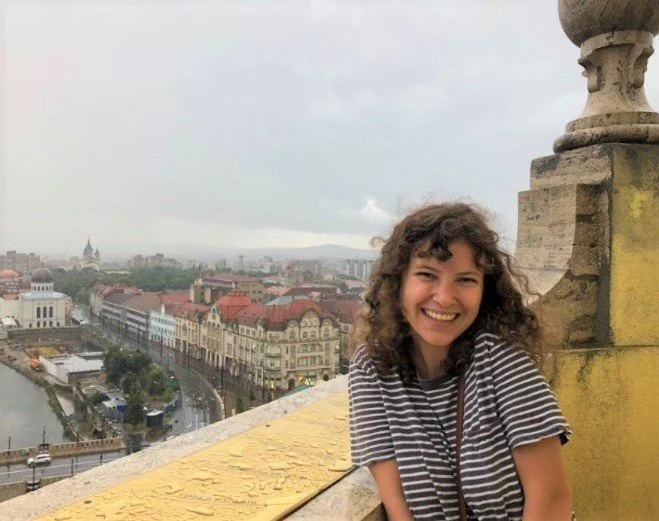
Program Fellow Gabrielle Cascio shares her experience as an international educator in Romania, as part of the celebration of International Education Week.
How did you decide to go abroad initially?
Ever since I can remember, I have known that I wanted to travel, study, and work abroad. Upon entering university, I was fortunate to find professional and academic programs in Romania and the UK that aligned with my goals and values.
Can you explain the program where you worked in Romania?
During the 2018-2019 academic year, I worked as the Romania Program Director at Learning Enterprises, a student run non-profit dedicated to cultural exchange through English language teaching. In this capacity, I matched seven university students with host families and learning institutions across Romania where they each facilitated English language lessons and engaged with their host communities for six weeks during the summer.
What is your favorite thing about Romanian culture?
Teaching English in Transylvania provided me with the unique opportunity to engage with both Romanian and Hungarian traditions and histories. Attending traditional Hungarian and Romanian dance festivals was one of the highlights of my time in Romania.
What was one unexpected challenge of the experience?
Learning how to rely on nonverbal communication to express myself in the classroom and with the people I interacted with was one of the most challenging and simultaneously rewarding experiences I had while in Romania.
How does your international experience inform your current work?
Teaching and studying abroad imbued me with a degree of flexibility and open-mindedness that I consistently draw on in my work at the Alliance.
Do you have one piece of advice for someone considering participating in international exchange?
Go into the experience with an open mind, an open heart, and an empty stomach!
What is one item that you do not travel without?
As an avid reader, I never travel without a novel, preferably one that has a connection to the place where I am traveling.
Introducing the 2019 McCarry Leadership Awardees!

TANYA BUROVTSEVA, External Engagement Manager, InterExchange
Originally from Ukraine, Tanya first experienced the field of international exchange as a program participant and is a proud alumna of two Exchange Visitor Programs: Summer Work Travel and Trainee. In her current role as External Engagement Manager, she is leading InterExchange’s advocacy activities by collaborating with fellow sponsor organizations and representing InterExchange in advocacy projects on local and national levels. One of Tanya’s favorite parts of her work is creating an online series of cultural advice for InterExchange participants called Tanya’s Tips, where she uses her own exchange program experience to help incoming students navigate American culture. Tanya holds a Master’s Degree in Political Science/International Relations from Suffolk University in Boston.
"Attending the Alliance Annual Conference was a very special and inspirational experience for me. It's an excellent opportunity to network with exchange industry professionals, learn more about the latest trends and, most importantly, get inspired again and again with the impact that cultural and educational exchange programs make in individual lives, communities, and the world. Receiving the McCarry Leadership Award and being recognized for my work is a great honor. I look forward to being a part of the inspirational network of past and future award recipients and to collaborate on meaningful projects together!"
JENNIFER CHEN, Digital Program Specialist, World Learning
Jennifer Chen is the Digital Program Specialist at World Learning. In her role, she manages The Experiment Digital, a virtual exchange program for high school students in Algeria, Iraq, the United States, and Yemen, and provides consultation on various digital programming initiatives for youth, undergraduate students and professionals. Ms. Chen grew up living in Taiwan, Italy and Thailand. She previously worked at PBS KIDS designing mobile learning products for children and was a former high school history teacher. She received her B.S. in International Politics from Georgetown University and M.Ed. in Technology, Innovation and Education from the Harvard Graduate School of Education.
"Attending the Annual Conference was a rewarding experience. The sessions inspired me to think more intentionally about program design, stakeholder engagement and digital storytelling; the luncheon offered a productive space for me to network with a variety of practitioners in the field of international exchange. After hearing from a wide range of specialists from different sectors, I felt motivated to further explore the role, potential, and reach of virtual exchange in the greater international exchange landscape."
KATE SANDERS, Program Officer, Meridian International Center
Kate came to work in international exchanges after a long history of cross-cultural living and learning. She lived as an expat with her family in Guatemala, spent a high school semester in Australia with Youth for Understanding (YFU), and studied for two college semesters abroad in Honduras and Spain, and a year teaching English in Vietnam. She is currently a Program Officer in the Professional Exchanges Division at Meridian International Center where she administers International Visitor Leadership Programs (IVLP) for the U.S. State Department. Prior to that she obtained her M.A. in Anthropology and Education from Columbia University Teachers College.
"It was truly an honor to be recognized as a McCarry Leadership Awardee. I appreciated the opportunity to attend the Annual Conference, connect with so many of my inspiring colleagues in the industry, and hear from expert panelists on the trends and challenges facing the world of exchange programs. At the same time, the breakout sessions catered to more niche interests and allowed for in-depth conversations on topics to support our day-to-day work. Following the conference, I felt renewed in my commitment to our field and passion to increase access to quality exchanges."
2018 Alliance Annual Conference

2018 Annual Conference Highlights
For the first time ever this year, the Alliance expanded its traditional Annual Meeting into a Conference to include non-Alliance members. We developed a number of new sessions to address timely issues, including sessions related to ROs/AROs, Consular Affairs updates, F-1 exchanges, Communications/Branding, and how the #MeToo movement impacts our community.
We welcomed an unprecedented 319 attendees this year, including 217 Alliance members and supporters, and 20 non-Alliance members. (Click here for full participant list).A major highlight of our Annual Conference was the strong presence of and participation by the Department of State, Department of Commerce and Congressional staff. Over 60 government officials joined us for the conference this year. We were honored to welcome Assistant Secretary of the Bureau of Educational and Cultural Affairs Marie Royce, as well as other ECA’s Deputy Assistant Secretaries.
It was a pleasure connecting with many colleagues throughout the Conference and at our Networking Reception. For a visual recap of the two content-filled days, take a look at our Photo Album.
25th Anniversary Gala Dinner
On the eve of the Annual Conference, in celebration of the Alliance’s 25th Anniversary, we organized the first-ever Alliance Gala dinner, where we looked back on the accomplishments of the Alliance and its members over the years. Our 25th Anniversary Gala dinner hosted 256 attendees, including 105 Alliance members and supporters, 11 government officials, and 5 previous Alliance staff.
2019 Comprehensive Annual Report on Public Diplomacy & International Broadcasting
[et_pb_section fb_built="1" admin_label="section" _builder_version="3.26.6"][et_pb_row admin_label="row" _builder_version="3.25" background_size="initial" background_position="top_left" background_repeat="repeat"][et_pb_column type="4_4" _builder_version="3.25" custom_padding="|||" custom_padding__hover="|||"][et_pb_text _builder_version="3.27.4" background_size="initial" background_position="top_left" background_repeat="repeat" z_index_tablet="500" text_text_shadow_horizontal_length_tablet="0px" text_text_shadow_vertical_length_tablet="0px" text_text_shadow_blur_strength_tablet="1px" link_text_shadow_horizontal_length_tablet="0px" link_text_shadow_vertical_length_tablet="0px" link_text_shadow_blur_strength_tablet="1px" ul_text_shadow_horizontal_length_tablet="0px" ul_text_shadow_vertical_length_tablet="0px" ul_text_shadow_blur_strength_tablet="1px" ol_text_shadow_horizontal_length_tablet="0px" ol_text_shadow_vertical_length_tablet="0px" ol_text_shadow_blur_strength_tablet="1px" quote_text_shadow_horizontal_length_tablet="0px" quote_text_shadow_vertical_length_tablet="0px" quote_text_shadow_blur_strength_tablet="1px" header_text_shadow_horizontal_length_tablet="0px" header_text_shadow_vertical_length_tablet="0px" header_text_shadow_blur_strength_tablet="1px" header_2_text_shadow_horizontal_length_tablet="0px" header_2_text_shadow_vertical_length_tablet="0px" header_2_text_shadow_blur_strength_tablet="1px" header_3_text_shadow_horizontal_length_tablet="0px" header_3_text_shadow_vertical_length_tablet="0px" header_3_text_shadow_blur_strength_tablet="1px" header_4_text_shadow_horizontal_length_tablet="0px" header_4_text_shadow_vertical_length_tablet="0px" header_4_text_shadow_blur_strength_tablet="1px" header_5_text_shadow_horizontal_length_tablet="0px" header_5_text_shadow_vertical_length_tablet="0px" header_5_text_shadow_blur_strength_tablet="1px" header_6_text_shadow_horizontal_length_tablet="0px" header_6_text_shadow_vertical_length_tablet="0px" header_6_text_shadow_blur_strength_tablet="1px" box_shadow_horizontal_tablet="0px" box_shadow_vertical_tablet="0px" box_shadow_blur_tablet="40px" box_shadow_spread_tablet="0px"]
The 2019 Comprehensive Annual Report on Public Diplomacy & International Broadcasting, released by the U.S. Advisory Commission on Public Diplomacy (ACPD) annually, assesses the major Public Diplomacy and global media activities conducted by the U.S. Department of State and the U.S. Agency for Global Media.
[/et_pb_text][/et_pb_column][/et_pb_row][/et_pb_section]
Opinion/Commentary: International connections, lasting local impact
As published in the Daily Progress on September 15, 2019.
At age 7, I attended summer camp for the first time. I don’t remember much else, but I vividly remember the camp counselors. They seemed impressively mature and exceedingly cool.
To add to their impact, my counselors were from all over the world. They taught us games and songs from their countries, treating us to their melodic accents.
As some of the first non-Americans I had ever met, they made a truly lasting impression on me. I went on to study abroad at the University of Edinburgh as an undergrad at the University of Virginia. I later conducted research in Wales and returned to Europe as an au pair in 2018.
I see this early experience at camp as one that has led to a lifelong pursuit of cross-cultural understanding.
Beyond the generic statements that international exchanges “broaden horizons,” what are the quantitative benefits of exchange?
International exchanges benefit the U.S. economy, strengthen national security and foster international diplomacy.
According to a 2016 public opinion poll, 90% of voters favor an education system that produces young leaders who understand other cultures and languages. In a nation that can sometimes appear rigidly divided, perhaps this is an issue that folks across the spectrum can agree on.
Though progress has been made in improving travel options, it remains a privilege to travel internationally. However, the U.S. Department of State runs exchange programs that temporarily bring international visitors to our hometowns.
While the news on immigration often focuses on those seeking permanent residence, the benefits of other types of opportunities for international partners living here temporarily are often overlooked. Participants can come to the U.S. as interns, camp counselors, au pairs, teachers or trainees.
One such program that brings cultural understanding to the U.S. is the very program that I was first exposed to as a child in Central Virginia, the U.S. Department of State’s Camp Counselor Program. This program educates young adults on American culture and allows participants to establish lasting bonds with Americans.
According to a recent report the independent research firm EurkaFacts, 76% of participants hold more positive views of American people and 71% hold more positive views of American culture after their stays. As they go on to become future leaders in their countries, the formative experience that participants undergo can have long-lasting, positive effects.
For instance, for the participants, one such positive effect is that they can practice their English with native speakers, giving them a further competitive edge in the global market.
But we benefit, too. Program participants inevitably come in contact with Americans during their short stays. Without any travel required on our part, we can learn about languages, traditions and etiquette from the visiting nationals. As hosts, when we open ourselves to the world, we gain skills that will prove valuable in almost any career field, from business, to the military, to education.
According to the report, Camp Counselor participants contributed $59.1 million to the U.S. economy in 2019 while costing nothing to taxpayers. In fact, the program has become so essential to American camps that 78% of host organizations would have to reduce services, while 50% would not be able to operate at all, without the Camp Counselor program.
This early international experience made a lasting impact on my life and inspired me to travel abroad. Most importantly, international exchanges benefit our local economy and foster peace internationally. Ultimately, this is a win for the United States and a win for all participating nations.
Selena Coles is the Communications Assistant at the Alliance for International Exchange.
International Camp Counselor Program Creates Connections, Supports American Economy
As the summer comes to a close, international camp counselors, who shape the experience of so many American campers, will be crossing over land and sea to return to their homes abroad. Not only does their experience infuse American camps with diverse cultures from across the world, a recent study shows it also provides these counselors the opportunity to forge relationships in the U.S. that they carry with them for years to come. These relationships and improved impressions of America help strengthen our national security.
The Department of State’s international Camp Counselor program annually brings international counselors to the United States for up to four-months during the summer. The program offers international visitors the chance to temporarily work alongside American colleagues, immerse themselves in American culture, and develop skill sets.
While international camp counselors have a lot to gain by participating in the program, the United States gains the opportunity to advance its public diplomacy goals. A recent study by EurekaFacts, Camp Counselor Program 2019 Review Report, found that the U.S. is increasing mutual understanding with each international camp counselor’s return home. According to the report, 84% of alumni report a more positive opinion about the U.S. and American culture after their experience at American camps. An astounding 98% of participants made connections with Americans, and over 91% kept in touch with those American connections after leaving the program. Participants noted that earning money is the least important motivator when deciding to participate in the program.
The U.S., on the other hand, benefits economically from the Camp Counselor program. In 2018, international camp counselors contributed over $59 million to the economy during their 30-day travel period at the conclusion of the program. In these 30 days alone, international camp counselors leave a big economic footprint, especially in New York, Pennsylvania, and Maine, where they contribute over $4 million in industries related to lodging and entertainment. Additionally, host camps see the program as a major benefit. In fact, 96% said that exposing American counselors and campers to international culture is a top motivator for participating in the program. Moreover, 99% of host camps offer equivalent chances regarding job opportunities for Americans in the U.S., as well as equal training and development opportunities.
Host camps also rely on the program for the success of their businesses. 91% of host camps believe their organization would be negatively impacted if the Camp Counselor program ceased to exist. Additionally, in the absence of international camp counselors, 78% indicated that their camp services would be reduced, and 50% reported this would result in the inability to operate during the summer season, leading to a drastic decrease in revenues.
The Department of State’s Camp Counselor program creates a network of cross-cultural connections that transcend borders. In addition to being a valuable public diplomacy tool, the program also helps American businesses and strengthens our economy, which is why it enjoys wide support from campers and their families to federal policy makers.
Ilir Zherka is Executive Director of the Alliance for International Exchange.
Laine Cavanaugh, Alliance Associate Director, contributed to this article.
Letter to the Editor: Baltimore Sun "U.S. summer work visa exploits foreigners”
Dear Editor:
Rachel Micah-Jones’ opinion article, “U.S. summer work visa exploits foreigners,” (August 6) neglects to mention the strong evidence that the Summer Work Travel program (SWT) is both protecting participants and serving our national security interests.
While we cannot comment on her reported site visits, the picture she paints is in sharp contrast with a rigorous, empirical study in 2017 of SWT. That study shows that 91 percent of alumni reported being satisfied with the program, and 74 percent said they had a higher overall regard for the United States.
Protection of participants is critical to SWT sponsor organizations and to the State Department, which oversees the program. All host employers and job placements are thoroughly vetted; all participants must be paid the exact same wage as American co-workers; and all participants can change job placements at any time – a participant’s visa is never tied to their host employer. U.S. sponsor organizations are in monthly contact with every participant, and meet with many in person during site visits. There are many more regulatory protections beyond these.
Perhaps one of the more important statistics of the 2017 SWT study is that 98 percent of alumni said they would recommend the program to a friend. That statistic demonstrates that, for the vast majority of SWT participants, the program is successful in providing international students with positive, life-changing experiences.
August 5 is Exchange Day – The Annual Celebration of International Exchange
Washington, D.C. – Exchange Day is an annual celebration of international educational and cultural exchange programs. Today, event participants are raising awareness about the power of exchange, while connecting participants and alumni with their local communities.
Around the United States, 35 organizations are hosting more Exchange Day events than ever before – 60 events in 26 states and the District of Columbia. For the first time, organizations are also hosting events in three other countries, specifically Hungary, Turkey, and the United Kingdom.
“Exchange Day encourages and inspires our alumni and participants to take action and practice the lessons of cultural appreciation and understanding,” said Assistant Secretary of State for Educational and Cultural Affairs Marie Royce. “These actions strengthen their own communities and share what they have learned through Exchange Programs."
Under the motto “Eat, Play, Give,” sponsor organizations provide international exchange participants an opportunity to enjoy American cuisine and take part in volunteering in their host communities. This year, events include a park clean up in New York City, New York; volunteering at a food bank in San Antonio, Texas; and a charity toy drive in San Francisco, California.
“The growing success of Exchange Day reinforces that program sponsors and supporters are actively pursuing ways to increase mutual understanding between peoples, which is the principal goal of exchange programs,” said Ilir Zherka, Executive Director of the Alliance for International Exchange.
Exchange Day is a grassroots level initiative by local organizations, companies, and individuals celebrating the power of international exchange.
The Alliance for International Exchange promotes the growth and impact of exchange programs. Since 1993, it serves as the collective public policy voice for now over 90 nongovernmental organizations comprising the international educational and cultural exchange community in the United States.
ILR Piece on Summer Work Travel Fatally Flawed
Executive Director of the Alliance for International Exchange, Ilir Zherka, released a statement today in response to the International Labor Recruitment’s piece entitled “Shining A Light on Summer Work.”
“Shining A Light on Summer Work” unfortunately is a poorly sourced opinion piece that is replete with conjecture and woefully lacking in empirical evidence for its argument. A rigorous 2017 study of SWT, however, paints a different and much more accurate picture: 91 percent of alumni reported being satisfied with the program; 74 percent said they had a higher overall regard for the U.S. after participating; and 98 percent said they would recommend the program to a friend.
Protection of participants is critical to SWT sponsor organizations and to the State Department, which oversees the program. All host employers and job placements are thoroughly vetted; all participants must be paid the exact same wage as American co-workers; and all participants can change job placements at any time – a participant’s visa is never tied to their host employer. U.S. sponsor organizations are in monthly contact with every participant, and meet with many in person during site visits. There are many more regulatory protections beyond these.
But here again, ILR’s piece is misleading. It references that 67 people called into an anti-trafficking hotline over a three-year period. Exchange sponsors strive for a zero incident culture, and that number comes close as it represents .006 percent of the nearly 1 million people who were in the U.S. as an exchange visitor during that same time. That statistic actually confirms how well the State Department regulations are protecting participants.
SWT is a valuable cultural exchange that supports the U.S. public diplomacy efforts and economy. It provides college students around the world opportunities to experience America and improve their English. Hundreds of thousands of students have taken part over 60 years, and our data show they have great experiences. These students would not keep coming back, nor would they recommend the program to friends, if that were not the case.
SWT is a win-win: it supports America’s national security, foreign policy, and economy, while providing international students with life-changing exchange experiences. That is why it enjoys broad bipartisan support in Washington, DC, as well as tremendous community support in the United States and around the world.
Letter to the Editor: Guardian "Foreign Students Hired for Summer Jobs..."
Dear Editor:
Legrain’s article, “Foreign students hired for summer jobs … ” (July 30) unfortunately disparages the U.S.’ Summer Work Travel (SWT) exchange program without an opportunity for supporters of the program to comment.
The article’s focus is a poorly sourced opinion piece that is replete with conjecture and woefully lacking in empirical evidence for its argument. A rigorous 2017 study of SWT, however, paints a different and much more accurate picture: 91 percent of alumni reported being satisfied with the program; 74 percent said they had a higher overall regard for the U.S. after participating; and 98 percent said they would recommended the program to a friend.
Protection of participants is critical to SWT sponsor organizations and the State Department. All host employers and job placements are thoroughly vetted, participants must be paid the exact same wage as American co-workers, and all participants can change job placements at any time. Moreover, U.S. sponsor organizations are in monthly contact with every participant, meeting in person with many through site visits.
But here again, Legrain’s article is misleading. It references that 67 people called into an anti-trafficking hotline over three years. Exchange sponsors strive for a zero incident culture, and that number comes close as it represents .006 percent of the nearly 1 million people who were in the U.S. as an exchange visitor during that time. That statistic actually confirms how well the State Department regulations are protecting participants.
The Summer Work Travel program has thrived because it is well regulated and provides meaningful cultural exchange experiences.
Sincerely,
Ilir Zherka
Executive Director
Alliance for International Exchange