
ALLIANCE COMMENTARY
Does the Summer Work Travel International Exchange Program Work?
ROCKVILLE, MD., August 28, 2017 – The Alliance for International Exchange, an association of cultural exchange agencies, asked EurekaFacts to find just that. The Summer Work Travel program—one of five programs included in the J1 Visitor Exchange Program—brings more than 100,000 college students from 100 countries to the United States during their summer break. These students typically work at amusement parks, ski destinations and hospitality small businesses during their peak seasons.
ROCKVILLE, MD., August 28, 2017 – The Alliance for International Exchange, an association of cultural exchange agencies, asked EurekaFacts to find just that. The Summer Work Travel program—one of five programs included in the J1 Visitor Exchange Program—brings more than 100,000 college students from 100 countries to the United States during their summer break. These students typically work at amusement parks, ski destinations and hospitality small businesses during their peak seasons.
The key findings of the research show that the program delivers significant benefits in terms of public diplomacy: SWT participants leave the program with higher regard and understanding of the United States while making lasting friendships with Americans they met. The program also meets internal needs of small businesses.
The assessment included a comprehensive review of the program, surveys of participants from the past five years, interviews and surveys of employers, and labor market statistics for the areas where the program operates. Among key findings, the report documents:
• 76 percent of SWT participants have a higher overall regard for the US after the program. Three in four say their opinions of American people became more positive.
• 61 Percent of SWT participants reported higher regard for American companies.
• The SWT program helps US businesses meet seasonal labor shortages in areas and times where American workers are not available. The analysis concludes that SWT participants do not displace local workers.
The study was led by Public Affairs research director Alec Ulasevich PhD, and Malinda Rhone, PhD, and company principal Jorge Restrepo, MGA following the international quality for market, public opinion and social research ISO 20252, to which EurekaFacts is certified. To access a copy of the full report go to: https://www.eurekafacts.com/SWTimpact. See a PDF version of this Press Release here.
About the Alliance for International Exchange
The Alliance for International Exchange (formerly Alliance for International Educational and Cultural Exchange) is an association of 90 nongovernmental organizations comprising the international educational and cultural exchange community in the United States. Founded in 1993 after a merger of the International Exchange Association and the Liaison Group for International Educational Exchange, the Alliance serves as the only collective public policy voice of the exchange community. Additional Information is available at https://alliance-exchange.org
About EurekaFacts
Based in Rockville, MD, EurekaFacts is a full-service market research and analysis firm that provides information and insight that helps identify and maximize opportunity for better impact. Established in 2003, the company has an established Institutional Review Board, and is certified to the international standard for market, public opinion and social research ISO 20252. Additional information is available at www.eurekafacts.com.
###
New Study Shows that Summer Work Travel Delivers Significant Public Policy Benefits and Strengthens the U.S. Economy
Comes on Heels of White House Threat to Eliminate the Program
Comes on Heels of White House Threat to Eliminate the Program
Washington, DC (August 29, 2017) – As a follow up to several stories that ran this week highlighting the Administration’s efforts to eliminate the J1 Exchange Visitor Program — a State Department cultural exchange for international students and young professionals —below is a link to a report by the research firm Eureka Facts showing that one of those J1 programs, Summer Work Travel (SWT), delivers significant benefits to the U.S. in terms of public diplomacy and economic contributions.T
his extensive assessment found that SWT participants leave the program with higher regard and understanding of the United States while making lasting friendships with Americans they met. The program also helps keep local, seasonal economies strong, meeting the unique needs of small, seasonal businesses. Participants in the SWT program also contributed more than $500 million to the U.S. economy in 2016 via the money they spent in the country.
Link to report: https://www.eurekafacts.com/phocadownload/SWT%20Impact%20Evaluation%20Final%20Report.pdf
###
The Alliance for International Exchange is an association dedicated to promoting the growth and impact of exchange programs. Since 1993, it serves as the collective public policy voice for now over 90 nongovernmental organizations comprising the international educational and cultural exchange community in the United States. The Alliance increases awareness of the impact of people-to-people diplomacy.
White House Interagency Group Seeking to Eliminate J1 Visitor Exchange Visa Program
Impact on American Business, Tourism and Diplomacy Devastating; New Study Shows Program Strengthens U.S. Economy.
Impact on American Business, Tourism and Diplomacy Devastating; New Study Shows Program Strengthens U.S. Economy
Washington, DC (August 27, 2017) – At a time when the world’s favorability rating of the United States hovers below 50 percent, a small working group based in the White House is seeking to eliminate the majority of privately-funded J-1 Exchange Visitor Programs. As reported today in the Wall Street Journal, American businesses fear the economic blow they will experience as a result of this effort.
Started by the State Department in 1961, the J1 Visa Program—which includes Summer Work Travel, Camp Counselor, Intern/Trainee and Au Pair programs—has brought many students and others from overseas to the U.S. to learn English, study, and get exposure to American culture. Some supplement the American workforce during peak business seasons, most notably in the hospitality and tourism sectors. Established with the goal of forging positive relationships across the globe, these privately-funded programs work to build lasting alliances with the world’s business, diplomatic, and academic leaders of tomorrow.
Eliminating the J1 programs is ostensibly part of a broader effort to “protect the interests of U.S. workers” under the Buy American, Hire American (BAHA) Executive Order, which was issued by President Trump in April. There are reports that the White House interagency group focused on shutting them down is being led by Senior Advisor, Stephen Miller.
The notion that the J1 programs undermine the President’s BAHA Executive Order, however, is misguided and uniformed. In many cases, these exchange programs work to effectively supplement and expand the American labor force during peak seasons. With this additional temporary support, companies, camps and other organizations can increase their services and ability to grow their businesses—and, ultimately, their permanent workforce. With low-record unemployment, the ability to find enough workers to fill seasonal positions has been greatly impeded. Camps will face a reduction in the number of American campers they can serve due to a lack of access to counselors. Any action to end these J1 programs severely undermines the ability for American entities to expand into new international markets.
To date, there has not been a transparent and open discussion on the issue. Many in Congress strongly disagree with this approach and voiced their concern in letters to Secretary of State Tillerson. Members of Congress from both the U.S. Senateand the House of Representatives urged Secretary Tillerson to oppose such an action. American communities, businesses, and families greatly benefit from these programs, they cost the American taxpayer nothing, and the image of America worldwide continues to erode.
“It is unclear why, at a time of economic and diplomatic uncertainty, a small group of advisors in the White House are conspiring to eliminate programs that have long-term benefits to both our positon in the world and our economy at home,” said Ilir Zherka, Executive Director of the Alliance for International Exchange. “These programs have strong bipartisan support. Any change would be a setback to U.S. national security and diplomacy efforts—not to mention deal a devastating blow to seasonal communities that depend upon increased temporary employment to prosper.”
If eliminated, the U.S. economy will take a substantial hit. It is estimated that J1 visa holders in the Summer Work Travel program contribute more than $500 million to the economy each year through program fees, travel, housing, and entertainment. Moreover, many businesses and sponsors of the J1 programs would have to lay off thousands of American workers if these changes are adopted by the administration.
A report being released on Monday by research firm EurekaFacts underscores two important benefits of the Summer Work Travel (SWT) program in particular: an ability for local businesses to overcome seasonal labor shortages and a high level of interest and satisfaction in the program. In fact, one quarter of surveyed employers indicated that without the presence of SWT students who complement their American workforce, they would not be able to operate at capacity during their peak season. It also revealed a 97 percent satisfaction rate among participants, with 76 percent gaining a higher overall regard for the U.S. after participating in the program.
More than 600 businesses from a vast range of industries have joined Americans for Cultural Exchange—a coalition in support of international exchange programs—representing localities across the country. They voice concerns ranging from the need to dramatically reduce hours of operation due to a lack of employees, the subsequent need to then shut down portions of their businesses, and the very real threat of having to lay-off year-round American employees due to lost revenue.
Also, over decades many American families have provided cultural exchange experiences to their children by hosting au pairs in their homes. Preserving the Summer Work Travel (SWT), Intern/Trainee, Camp Counselor, and Au Pair programs will benefit of American businesses, families, and the country’s image worldwide. Eliminating them would harm our diplomatic efforts and our economy.
“We urge the Trump administration to reject this dangerous approach to our foreign policy,” added Zherka. “We also call on exchange supporters in Congress to add their strong voices to the fight to save these critical public diplomacy tools from people who would put our nation’s national security at risk and harm many communities.”
###
The Alliance for International Exchange is an association dedicated to promoting the growth and impact of exchange programs. Since 1993, it serves as the collective public policy voice for now over 90 nongovernmental organizations comprising the international educational and cultural exchange community in the United States. The Alliance increases awareness of the impact of people-to-people diplomacy.
For any inquiries contact: Ranit Schmelzer at 202.538.1065, ranit@schmelzerstrategies.com
IIE report shows an increase in International Student enrollment in U.S. High Schools
The Institute of International Education (IIE) released a 2017 update to its 2014 report, Charting New Pathways to Higher Education: International Secondary Students in the United States. The update found “a strong increase” in international students on F-1 visas enrolling in high schools across the United States. These students use their enrollments as pathways to higher education institutions across the country.
The Institute of International Education (IIE) released a 2017 update to its 2014 report, Charting New Pathways to Higher Education: International Secondary Students in the United States. The update found “a strong increase” in international students on F-1 visas enrolling in high schools across the United States. These students use their enrollments as pathways to higher education institutions across the country.
IIE’s key findings include: The number of international secondary students has steadily increased since 2014 – tripling in size by 2016. About 72 percent (59,026) of international secondary students on an F-1 visa in 2016 indicated their intention to earn a diploma in a U.S. higher education. About 28 percent (22,955) of international students were enrolled through a J-1 visa in 2016. Compared to 2014 data, there a slight decline in J-1 exchange students at the secondary level. (See page 5). There has been an increase in the number of U.S. schools enrolling international students, especially among private institutions. Students from China make up 42 percent of all international secondary students. The number has increased to 48 percent from 2013 to 2016, outpacing the 12 percent growth seen overall from diploma-seeking and exchange students combined.
Additionally, the report notes that approximately two-thirds of exchange students are from Europe. Asian students make up the majority of international secondary students, with Europe and Latin America and the Caribbean making up 9 percent and 8 percent respectively.
China, South Korea, Vietnam, Mexico, Japan, and Canada are the top six sending countries of diploma-seeking secondary students in the United States and together makes up 78 percent of F-1 secondary students.
IIE also reports that across all 50 states of the United States, California, New York, and Texas are the top three host states of international students in both secondary and postsecondary levels of education. Additionally, the report found that private schools host over 94 percent of F-1 diploma-seeking students.In summary, IIE’s report acknowledges that high schools are becoming a source of for U.S. higher education institutions to recruit international students, and this trend is growing.
Countries’ International Education Policies Ranked in New Report
The British Council released the 2nd volume of their The Shape of Global Higher Education report. This version, released a year after the original, includes results from 12 additional countries as well as frames the results differently to aid higher education institutions rather than only national policy makers.
The British Council released the 2nd volume of their The Shape of Global Higher Education report. This version, released a year after the original, includes results from 12 additional countries as well as frames the results differently to aid higher education institutions rather than only national policy makers. Together the goal of the two frameworks is to “measure government support for international higher education engagement and identify the policy areas where collaborations are most sought.”The original framework separated results into 3 categories: openness of education systems, quality assurance and degree recognition, and equitable access and sustainable development policies. This framework “reflects the political will of the national government to support international engagement.” The countries with the most supportive international higher education (IHE) policies are Germany, the Netherlands, Malaysia, and Hong Kong. However, the report does not evaluate the effectiveness of the policies which consequently means it does not measure practical barriers to engaging in IHE.The new framework based itself around the themes that guide the internationalization strategies of higher education institutions: international mobility of students, international research collaboration, and transnational education (TNE). By looking at the national policies within these categories, it was possible to conduct an “in-depth exploration of countries’ stance in a particular IHE field”, thus identifying the areas best supported by governments. The report found that most governments prioritize student mobility. The countries with the most well-rounded policies are Australia, Hong Kong, the Netherlands, Malaysia, and the United Kingdom.Other key findings include:
- There is a strong positive relationship between the policies supporting international mobility and policies supporting transnational education.
- Only a third [of the states] have strong quality assurance for [TNE] programmes and recognise TNE qualifications.
- Globally, there is a consensus about the important contribution of international research collaborations to higher education, the economy and society.
- There is a strong national push towards collaborative funding and structures which encourage greater international collaborations. However, there is less support for streamlined visas which allow researchers and academics to pursue their research interest beyond national borders.
- The world’s regions are showing more harmonisation of their higher education systems. This appears to be driven by schemes which facilitate student mobility, collaboration among quality assurance agencies and a wider recognition of academic qualifications.
According to Janet Ilieva, the lead author of the report, the USA isn’t ranked high in either framework because of the absence of a national higher education policy.
“There isn’t a national policy and that’s mainly because internationalisation endeavours are driven at the institutional level. I don’t think the sector gets the same level of support as institutions in Germany for example.”
Overall however, according to Michael Peak, senior advisor on education research at the British Council:
“It seems that international higher education is a priority for a number of countries and this is not something we would’ve seen 10 to 15 years ago.”
New NAFSA Economic Impact Analysis: International students contribute $36.9 Billion to the U.S Economy
New data recently released by NAFSA: Association of International Educators indicate that the more than one million international students studying at U.S. colleges and universities during the 2016-17 academic year contributed $36.9 billion to the U.S. economy, while at the same time supporting more than 450,000 jobs. These numbers represent a 12.4% increase in job support and creation and a 12.5% increase in dollars contributed to the economy compared to the previous academic year.
New data recently released by NAFSA: Association of International Educators indicate that the more than one million international students studying at U.S. colleges and universities during the 2016-17 academic year contributed $36.9 billion to the U.S. economy, while at the same time supporting more than 450,000 jobs. These numbers represent a 12.4% increase in job support and creation and a 12.5% increase in dollars contributed to the economy compared to the previous academic year.NAFSA’s full report shows the benefits of international students in the United States, including enrollment data, economic contributions, and jobs supported. Particularly for jobs supported, the report finds that for every seven international students enrolled, three U.S. jobs are created.Jason Baumgartner of Indiana University’s Office of International Services conducted the economic analysis project. The report was completed using enrollment data from the Institute of International Education's (IIE) Open Doors 2017 report, which is produced in partnership with the U.S. Department of State’s Bureau of Educational and Cultural Affairs (ECA). In addition, tuition and expense data were pulled from the U.S. Education Department's National Center of Educational Statistics Integrated Postsecondary Education Data System and jobs data from the U.S. Commerce Department’s International Trade Administration and Bureau of Economic Analysis.NAFSA conducts an annual state-by-state and congressional district analysis of the economic contributions of international students and their families to the U.S. economy. This year, 10 states, including California, New York, Massachusetts, Texas and Pennsylvania, broke the $1 billion mark in contributions from international students. These states received a large contribution to their economy from spending by international students on living expenses, tuition and fees. The analysis also shows that with every seven enrolled international students, three U.S. jobs are created by spending in higher education, accommodation, dining, retail, transportation, telecommunications and health insurance.State- and district-specific information can be accessed here.
J Day: August 7, 2017
J Day is a nationwide celebration of the power of international exchange. International exchange participants will come together with their American hosts to "eat, play, and give" -- to share American customs, to give back to their communities, and to have some fun. J Day is also an opportunity to raise awareness of the J-1 Exchange Visitor Program (EVP) and spread the word about the power and breadth of cultural exchange. J Day was piloted in the summer of 2014 by three Alliance members -- CCI Greenheart, CENET: Cultural Exchange Network, and Spirit Cultural Exchange.
J Day is a nationwide celebration of the power of international exchange. International exchange participants will come together with their American hosts to "eat, play, and give" -- to share American customs, to give back to their communities, and to have some fun. J Day is also an opportunity to raise awareness of the J-1 Exchange Visitor Program (EVP) and spread the word about the power and breadth of cultural exchange.J Day was piloted in the summer of 2014 by three Alliance members -- CCI Greenheart, CENET: Cultural Exchange Network, and Spirit Cultural Exchange.
CLICK HERE FOR MORE INFORMATION ON J DAY 2017


Surveys Predict Future International Student Enrollment, Show Different Results
University World News recently compared two surveys describing the trend of international student admission yields to U.S. colleges and universities. The surveys were conducted in response to widespread concern in the education industry of how recent developments in U.S. visa and immigration policy could affect international enrollment.
University World News recently compared two surveys describing the trend of international student admission yields to U.S. colleges and universities. The surveys were conducted in response to widespread concern in the education industry of how recent developments in U.S. visa and immigration policy could affect international enrollment.The Institute for International Education’s (IIE) Shifting Tides report claims that overall there was only a 2% decrease in the expected number of students who accepted their admission offer this year. This is comparable to domestic student yields, which also saw a 2% decline. However, certain states like Texas, did notice a sharp decline in yield (9%). IIE also stated however, that their survey sample was small and results should consequently be treated with caution.The second survey, conducted by the Council of Graduate Schools (CGS) rendered different results, showing an alarming decline in admission yields among international students. According to the CGS survey, graduate deans saw a 46% decrease in international student admission acceptances, compared to only 24% who saw the same with domestic students. Additionally, CGS reported 41% of graduate deans saw an increase in domestic master’s student yields. The admission yields vary by region with 52% of graduate deans seeing declines from Middle Eastern students.For the students themselves, IIE reported that securing and maintaining a visa is the top priority followed by feeling welcome while in the United States. Unfortunately, both surveys were conducted before the recent Supreme Court ruling that allowed for a partial approval of the Trump administration’s travel ban. Neither report includes data on how the ban will affect enrollment despite international students being exempted.Additionally, the IIE survey reflects only undergraduate admission results since graduate response rates were low. The CGS survey collected results from member deans of graduate institutions, providing similar, but not directly comparable information to the IIE findings.
International Exchange Programs Receive Unprecedented Support
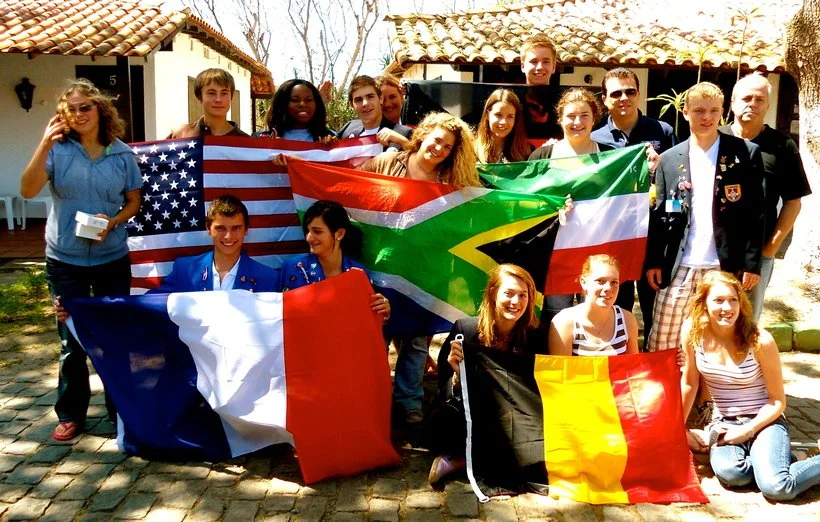
It has been a busy summer for those of us who promote the growth and impact of international exchange programs. In May, the White House released a detailed budget that called for an unprecedented 32 percent cut to the Department of State, and a 55 percent cut to the Bureau of Educational and Cultural Affairs (ECA), which funds and oversees a wide range of critical international exchange programs which enable people-to-people diplomacy. If enacted, these cuts would greatly damage the United States’ soft power diplomacy and put our nation at risk.
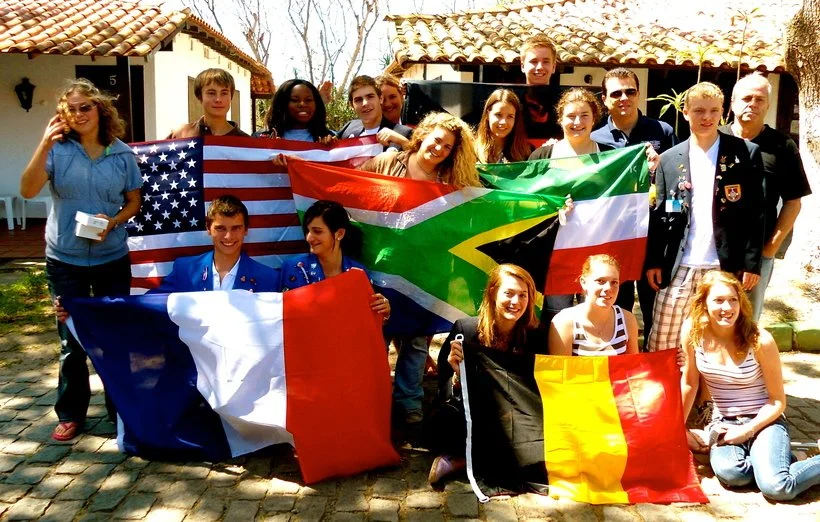
It has been a busy summer for those of us who promote the growth and impact of international exchange programs. In May, the White House released a detailed budget that called for an unprecedented 32 percent cut to the Department of State, and a 55 percent cut to the Bureau of Educational and Cultural Affairs (ECA), which funds and oversees a wide range of critical international exchange programs which enable people-to-people diplomacy. If enacted, these cuts would greatly damage the United States’ soft power diplomacy and put our nation at risk.
The Alliance and our members got to work — meeting with Congressional lawmakers about the real-world perils of these potential cuts and making sure they understand that their decisions will impact America’s strategic interests for decades.
As Defense Secretary James Mattis has suggested, the way to reduce the possibility of war is to increase people-to-people diplomacy – which is at the heart of cultural and educational exchanges. Exchange programs enhance U.S. national security and prosperity by building productive partnerships, mutual understanding, and personal connections that help us address critical global issues including strengthening the world economy and combating terrorism. They also create a welcoming environment for over a million international students to study in the United States. Last year alone, these students contributed more than $32 billion to the U.S. economy, supporting more than 400,000 jobs across the country.
While the administration’s budget proposal serves as a set of recommendations to Congress as they make decisions about federal spending, Congress ultimately decides what is funded and what is not. And fortunately, Congress has consistently demonstrated a strong, bipartisan commitment to exchange programs. This spring, Congress passed the 2017 Omnibus Bill, which secured a seven percent budget increase for educational and cultural exchange programs through the end of the year.
We have a strong – and critical – champion in Senator Lindsey Graham, the Republican chair of the Senate subcommittee responsible for diplomacy and foreign aid, who recently argued that the cuts would “gut soft power,” and that, “If we implemented this budget, you’d have to retreat from the world or put a lot of people at risk.”
We’re extremely grateful for Senator Graham’s staunch support, as well as for the unwavering bipartisan support of Appropriations Committee Chairman Hal Rogers and Ranking Members Senator Patrick Leahy and Representative Nita Lowey. All four leaders recognize that exchanges advance US interests for the long term.
Not surprisingly, U.S. ambassadors strongly agree. In an effort organized by the Alliance for International Exchange, 163 former U.S. ambassadors sent a letter to the Chairs and Ranking Members of the U.S. House and Senate Appropriations Committees – who are essential to making these funding decisions – urging them to support full funding in fiscal year 2018 for the Bureau of Educational and Cultural Affairs. This historic show of support for international exchanges by the diplomatic community is significant both for the number of signatures and the broad bipartisan support it displays.
“We are former United States Ambassadors to countries across the globe. While we may differ in political ideology, we write today united with one voice to ask that the Senate and House Appropriations Committees support full funding in fiscal year 2018 for the Department of State’s Bureau of Educational and Cultural Affairs,” wrote the ambassadors.
“In the countries where we have served, we have seen exchange programs help draw emerging political leaders closer to the United States, provide international scholars with critical information and contacts they need in America, and strengthen the appreciation of our country by exposing hundreds of thousands of people to our culture. These are the soft-power results that complemented our direct diplomacy efforts in countries that are critical to our national security,” they continued.
The letter came on the eve of an important mark-up in the House of Representatives Appropriations Committee of the State and Foreign Operations bill, which funds the State Department programs, including international exchanges. With bipartisan support, the committee approved funding for Educational and Cultural Exchange Programs at $590.9 million, the same level as in fiscal year 2016.
While this is a significant achievement, it’s only one step in a long Congressional process. The House has yet to pass a budget resolution and the Senate is unlikely to begin work on the Appropriations Bill until September. The good news is that we, in the exchange community, have the rest of the summer to enlist the support of senators who strongly believe international exchange programs should be fully funded because they are essential to our national security and prosperity.
By Ilir Zherka, Executive Director of the Alliance for International Exchange.
U.S. Ambassadors Urge Congress to Fund Educational and Cultural Exchange Programs
More than 160 Former U.S. Ambassadors Oppose Cutting Funding for State Department’s Bureau of Educational and Cultural Affairs.
More than 160 Former U.S. Ambassadors Oppose Cutting Funding for State Department’s Bureau of Educational and Cultural Affairs
Washington, DC (July 18, 2017) – One hundred and sixty-three former U.S. ambassadors today sent a letter to the Chairs and Ranking Members of the U.S. House and Senate Appropriations Committees urging them to support full funding in fiscal year 2018 for the Department of State’s Bureau of Educational and Cultural Affairs (ECA).
ECA funds and oversees a wide range of critical international exchange programs which enable people-to-people diplomacy and promote U.S. national security and foreign policy interests. Funding for ECA is contained in the State and Foreign Operations (SFOPS) Appropriations Bill.
The letter comes as the full House Committee on Appropriations is scheduled to mark-up SFOPS on Wednesday.
“We are former United States Ambassadors to countries across the globe. While we may differ in political ideology, we write today united with one voice to ask that the Senate and House Appropriations Committees support full funding in fiscal year 2018 for the Department of State’s Bureau of Educational and Cultural Affairs. The unprecedented 55 percent cut called for in the Administration’s full budget would jeopardize our nation’s public diplomacy efforts,” wrote the ambassadors.
“In the countries where we have served, we have seen exchange programs help draw emerging political leaders closer to the United States, provide international scholars with critical information and contacts they need in America, and strengthen the appreciation of our country by exposing hundreds of thousands of people to our culture. These are the soft-power results that complemented our direct diplomacy efforts in countries that are critical to our national security,” they continued.
A copy of the full letter and a list of signers is available here.
“This is an historic show of support for international exchanges by the diplomatic community,” said Ilir Zherka, Executive Director of the Alliance for International Exchange, which organized the letter. “It is significant both for the number of signatures and the broad bipartisan support for educational and cultural exchanges it displays. We thank this distinguished group of high-ranking U.S. diplomats for going on the record and expressing their resistance to State Department exchange program funding cuts.”
“We are grateful that Congress has consistently demonstrated a strong, bipartisan commitment to exchange programs. But the Administration continues to push for dramatic cuts and a reorganization of exchange programs that would significantly narrow their reach. This would be a grave mistake,” added Zherka.
In April, Congress passed (and the President signed into law) a $1 trillion spending bill to fund the government through September 30, included an increase of seven percent for educational and cultural exchange programs – just short of the high-water mark of $635 million in fiscal year (FY) 2010.
The House Subcommittee on State, Foreign Operations, and Related Programs last week approved $590.9 million for FY 2018 for Educational and Cultural Exchange Programs. This marks a cut of approximately seven percent compared to the current FY 2017 Omnibus bill funding level of $634 million, and would bring exchange program funding back to the FY 2016 Omnibus funding level.
###
The Alliance for International Exchange is an association dedicated to promoting the growth and impact of exchange programs. Since 1993, it serves as the collective public policy voice for now over 90 nongovernmental organizations comprising the international educational and cultural exchange community in the United States. The Alliance expands awareness of the impact of people-to-people connections.
U.S. Ambassadors Urge Congress to Fund Educational and Cultural Exchange Programs
International exchange programs got a huge boost of support this week as 163 former U.S. ambassadors sent a letter to the Chairs and Ranking Members of the U.S. House and Senate Appropriations Committees urging them to support full funding in fiscal year 2018 for the Department of State’s Bureau of Educational and Cultural Affairs (ECA).
International exchange programs got a huge boost of support this week as 163 former U.S. ambassadors sent a letter to the Chairs and Ranking Members of the U.S. House and Senate Appropriations Committees urging them to support full funding in fiscal year 2018 for the Department of State’s Bureau of Educational and Cultural Affairs (ECA).
“We are former United States Ambassadors to countries across the globe. While we may differ in political ideology, we write today united with one voice to ask that the Senate and House Appropriations Committees support full funding in fiscal year 2018 for the Department of State’s Bureau of Educational and Cultural Affairs. The unprecedented 55 percent cut called for in the Administration’s full budget would jeopardize our nation’s public diplomacy efforts,” wrote the ambassadors.
A copy of the full letter and a list of signers is available here.
The letter is significant both for the historic number of signatures and the broad bipartisan support for educational and cultural exchanges it displays.Last week, the House Subcommittee on State, Foreign Operations, and Related Programs approved $590.9 million for FY 2018 for Educational and Cultural Exchange Programs. This marks a cut of approximately seven percent compared to the current FY 2017 Omnibus bill funding level of $634 million, and would bring exchange program funding back to the FY 2016 Omnibus funding level. The full House Appropriations Committee is expected to mark-up the bill this week.The budget recommendation offered in May by the White House called for an unprecedented 55 percent cut for Bureau of Educational and Cultural Affairs, which, if enacted, would greatly jeopardize our nation’s public diplomacy efforts.
Supreme Court Partially Approves Administration’s Travel Ban
On Monday, June 26, the Supreme Court granted partial approval for President Trump’s second Executive Order issued in March, which stopped the inflow of refugees for 120 days and blocked travel for 90 days from six countries: Yemen, Sudan, Syria, Iran, Libya, and Somalia.
On Monday, June 26, the Supreme Court granted partial approval for President Trump’s second Executive Order issued in March, which stopped the inflow of refugees for 120 days and blocked travel for 90 days from six countries: Yemen, Sudan, Syria, Iran, Libya, and Somalia. The Court also agreed to hear two cases filed against the travel ban in the first session of the October Term 2017.In a narrow decision, the Supreme Court granted the administration’s petitions to enforce the travel ban, but only for those “foreign nationals who lack any bona fide relationship with a person or entity in the United States.”In order to avoid violating the rights of a person or entity already in the United States, the Court will allow travelers with existing connections to enter the U.S. As outlined by the American Immigration Council, the categories for this exception include:
Individuals with a valid visa issued on or before June 26, 2017
Individuals with visas who are coming to live or visit with family members
Students admitted to U.S. colleges or universities
Workers with accepted offers of employment with U.S. businesses
Lecturers invited to speak in the U.S.
Other types of business travelers
Refugees with close family connections
In a press release, Dr. Esther D. Brimmer, Executive Director and CEO of NAFSA: Association of International Educators, argues that:
“International educators are relieved to be able to tell our international students and scholars that they should not be afraid to come to our campuses to study, work and exchange ideas. We are pleased the court acknowledged that students and scholars and others with connections to the United States could not be barred from our country simply because of their nationality or religion, at least while the underlying litigation continues.“Unfortunately, individuals from the affected countries with no ties to the United States will be subject to the ban on the grounds that a lack of connection to the United States somehow provides evidence of a national security threat. If that is the case, then we should be making every effort to create connections and ties through robust international exchange and travel, and we call on the administration to make clear in its guidance that prospective students and scholars should not be afraid to seek admission to the United States regardless of their current ties.”
It is unclear if the Court’s decision is prospective or retrospective only and how it will affect individuals who form bona fide relationships after June 26, 2017. Travelers from one of the designated Muslim-majority countries may be barred from entering the U.S. if the purpose of their trip is not to visit family but other reasons.Justices Thomas, Alito, and Gorsuch expressed partial dissent with the Court’s majority opinion. They argue that the entire injunction should have been lifted because the unclear phrasing of the compromise will “burden executive officials with the task of deciding – on peril of contempt – whether individuals from the six affected nations who wish to enter the United States have a sufficient connection to a person or entity in this country.”Given the Supreme Court’s ruling and a memorandum issued by President Trump on June 14, the ban is set to go into effect at 8 pm EST on June 29. However, the 90-day period set forth in the Executive Order would end in late September, before the Court meets. Since the point would be moot, it is possible the Supreme Court would end up not reviewing the case at all in October.
Retired High-ranking Admiral and General: To Accept the FY2018 Budget Proposal is a Mistake
In a recent Politico article, retired Admiral Mike Mullen and retired General James Jones make a case for global engagement and international aid, urging Congress not to accept the Trump administration’s proposed FY2018 budget, specifically the 32% cut to the Department of State and USAID accounts. They warn:
In a recent Politico article, retired Admiral Mike Mullen and retired General James Jones make a case for global engagement and international aid, urging Congress not to accept the Trump administration’s proposed FY2018 budget, specifically the 32% cut to the Department of State and USAID accounts. They warn:
“This is exactly the wrong decision at a time when development efforts in the world’s poorest and most fragile countries are needed more than ever. In turn, these severe cuts to USAID would only increase the risk to Americans and to our brave military service members. Congress should reject this dangerous path.”
Mullen and Jones claim that while the goal to strengthen national security is commendable, military action is not necessarily the best course to take in all situations. Helping states develop and promoting good relations is another critical method of ensuring national security. They discourage people to think of development assistance as just charity, but rather to consider it as another effective tool for the United States to use:
“American security is advanced by the development of stable nations that are making progress on social development, economic growth and good governance”.
Jones and Mullen further suggest that:
“Congress can, and should, make America safer with a robust and strategic Phase Zero initiative that engages the U.S. government, nongovernmental organizations and the private sector to synergistically prevent conflict and promote security, development, and governance rooted in the rule of law. Such an initiative — accompanied by other targeted reforms to our foreign assistance programs — would fill a dangerous vacuum that military intervention alone simply cannot address. Proactive conflict-prevention strategies are far less expensive in terms of resources and lives expended than reactive use of our Armed Forces.”
Jones and Mullen, together with 14 other high-ranking military officials, also submitted testimony to the Senate Armed Services Committee in support of protecting the State-Foreign Operations (SFOPS) budget.Their Politico article and congressional testimony were referenced by Members of Congress during a House Foreign Affairs Committee hearing and a House SFOPS Appropriations Subcommittee hearing on June 14. Both hearings featured Secretary of State Rex Tillerson as a witness, who reviewed the administration’s FY2018 budget proposal for the Department of State
Alliance Statement: Administration's Cuba Travel Policy Hinders Public Diplomacy
Statement by Ilir Zherka, Executive Director of the Alliance for Internatioanl Exchange:President Trump’s new policies towards Cuba includes a detrimental restriction for Americans traveling to the island for educational purposes. The administration’s argument for cancelling this travel category is the erroneous assumption that people-to-people exchanges do not help the Cuban people and instead only benefits the Cuban government.
Statement by Ilir Zherka, Executive Director of the Alliance for Internatioanl Exchange:
President Trump’s new policies towards Cuba includes a detrimental restriction for Americans traveling to the island for educational purposes. The administration’s argument for cancelling this travel category is the erroneous assumption that people-to-people exchanges do not help the Cuban people and instead only benefits the Cuban government.
People-to-people interactions, however, allow for increased cultural understanding between Cubans and Americans, helping to overcome mistrust between the two nations. The United States has engaged with citizens of other countries through public diplomacy programs when facing tense relationships with their foreign governments. We applaud the Members of Congress that have opposed these new policy measures, such as Senator Jeff Flake and Representative Mark Sandford, both of whom introduced legislation that would eliminate travel restrictions to Cuba.
The United States should continue to be a leader in connecting Americans to people all over the world because, by doing so, we are also advancing our national security interests.
Pennsylvania Appropriator Stresses Power of Exchanges During House Hearing on FY2018 State Department Budget
During this week’s House State-Foreign Operations (SFOPS) Appropriations Subcommittee Hearing on the administration’s FY2018 budget request for the Department of State, Pennsylvania Congressman Charlie Dent (R) voiced his strong support for educational and cultural exchange programs and expressed concern about the 55% cut to exchange program funding proposed by the Trump administration for FY2018.
During this week’s House State-Foreign Operations (SFOPS) Appropriations Subcommittee Hearing on the administration’s FY2018 budget request for the Department of State, Pennsylvania Congressman Charlie Dent (R) voiced his strong support for educational and cultural exchange programs and expressed concern about the 55% cut to exchange program funding proposed by the Trump administration for FY2018.Focusing particularly on the Congress-Bundestag Youth Exchange (CBYX) program, Congressman Dent explained:
“On cultural exchange programs – something that’s important. It’s a 55% cut. I’m familiar with one of them, the Congress-Bundestag Youth Exchange program ... We invest in that, the Germans invest in it. The highest levels of that government will talk to me about it and say it’s important … I think when we make these kinds of cuts, we have to think about not only our investment but others who are investing in the same types of programs. Particularly allies and particularly when they’re relatively small numbers of dollars and multibillion dollar budgets. I think we have to be a little bit more nuanced and precise because I think it sends a message for a relatively small amount of money. It sends a bad message … In that case, we’re talking about former enemies who are now great allies.”
To which Secretary Tillerson replied:
“I think not just in allies but even as we’re trying to develop relationships with adversaries, to give us the ability to talk to one another and understand one another, these types of cultural people-to-people programs are very important. … The best diplomatic tool really is economic development and economic relations between countries because as people can tie their own economic well-being to this other nation and they see benefits of those relationships, that strengthens the understanding of the population of one another. The cultural exchanges only help strengthen that.”
To read about the Senate Hearing, please click here
Exchange Programs Highlighted During Senate Hearing on FY2018 State Department Budget
Educational and cultural exchange programs were mentioned twice during a hearing of the Senate State-Foreign Operations (SFOPS) Appropriations Subcommittee this week. Secretary of State Rex Tillerson appeared before the committee to review the administration’s FY2018 budget request for the U.S. Department of State.
Educational and cultural exchange programs were mentioned twice during a hearing of the Senate State-Foreign Operations (SFOPS) Appropriations Subcommittee this week. Secretary of State Rex Tillerson appeared before the committee to review the administration’s FY2018 budget request for the U.S. Department of State. During their questioning of the Secretary, Senators John Boozman (R-AR) and Chris Coons (D-DE) both attested to the positive impact of exchange programs and asked the Secretary to reconsider the steep funding cuts to people-to-people exchanges proposed by the administration for the next fiscal year.Speaking specifically about the Fulbright program, Senator Boozman noted:
“As an Arkansan and someone who believes you change the world through engagement, the Fulbright program has been something that we’re proud of in the state of Arkansas. We’re talking about a 47% overall cut there. I wish that would be something that you look at, too. [A number of years ago] I was in Israel and visiting with the Finance Minister from Palestine and it turned out that he had been to summer school at the University of Arkansas. Went on and finished up at the University of Texas…Those things are so so very valuable.”
Secretary Tillerson responded by saying:
“We see the Fulbright program as extremely valuable as well … Our reduction in the budget … we understand it will have an impact. What we want to do is to the extent that we can help in attracting more private donations to support the program and perhaps begin to attract donations from countries who have benefited from the Fulbright program as well. So, it’s not in any way an indication of our view of the value of that program.”
Noting that cutting exchange program funding in half is not a choice he himself would have made, Senator Coons highlighted the Young African Leaders Initiative (YALI) as a program with a significant positive impact:
“We have people to people programs like the Fulbright scholarships that have had a big positive impact and that elevate the reputation we enjoy in the world … The Young African Leaders Initiative is a relatively modest in-scope program that has had a big impact. I thought it was not the choice I would have made to cut all the educational and cultural exchange programs in half, and YALI would be one of them. I hope you will reconsider that because I think these are powerful programs that connect us to parts of the world where we benefit from a positive relationship and that next generation of leaders.”
New National K-12 Report Shows Renewed Interest in Language Learning
A new report, National K-12 Foreign Language Enrollment Survey Report, provides a comprehensive update on the state of K-12 and K-16 foreign language enrollment data in the United States, where more than 21 percent of households speak a language other than English at home.
A new report, National K-12 Foreign Language Enrollment Survey Report, provides a comprehensive update on the state of K-12 and K-16 foreign language enrollment data in the United States, where more than 21 percent of households speak a language other than English at home. The report is sponsored by the American Councils for International Education, in partnership with the American Council on the Teaching of Foreign Languages, the Center for Applied Linguistics, the Modern Language Association, and the National Councils for State Supervisors for Foreign Languages.According to the report, its goal is to help school districts, state departments of education, researchers, and government agencies identify schools receptive to language program expansion and improvement. Pilot programs in the identified schools can consequently serve as a model for other schools across the nation. The lack of consistent and comprehensive data on enrollment at the K-12 level hinders these groups to properly assess the state of foreign language education in the US and thus also the policies that surround it.Survey results also show that despite the availability of new teaching approaches, such as online or hybrid, the norm is still a face-to-face language teaching method. Alternatively, due to low enrollment in language classes, schools typically try to adopt online and extracurricular options. The problem lies in the low awareness of the value of languages among parents and students despite the demand for bilingual workers having doubled from 2010-2015. The driving force for the presence of language programs in schools is parents.The report was launched at the National Press Club in Washington, D.C on June 1, 2017. At the event, report sponsors explained that more school districts are investing in dual-language immersion programs, but do not yet know the full impact or how to defend their presence and costs to school boards. According to the report, many schools are beginning to rely on neighboring institutions to bolster language programs in danger of disappearing due to limited resources.Key highlights of the report, include:
- 44 states plus DC report there is a world language/bilingual teacher shortage.
- New Jersey and DC have the highest percentage of K-12 students enrolled in a foreign language: 51.18% and 47.17% respectively.
- Spanish is the most widely taught program across all grades and accounts for 46% of all high school language programs.
- Chinese is the most popular Flagship language (Flagship languages include Arabic, Chinese, Hindi/Urdu, Korean, Persian, Portuguese, Russian, Swahili, and Turkish); 80% of students in a Flagship program are enrolled in Chinese.
- 84% of K-8 students in the Euro zone are enrolled in a foreign language program while only 20% of K-12 students in the US are enrolled.
To help defend the presence and value of languages in school, the report made the following recommendation:
- “An effort should be undertaken to study the feasibility of comprehensive and consistent data collection across the pre-K-12 system.”
- “A national mandate, parallel to those fore STEM, to mandate compliance with language education data collection.”
- “Documentation of language learning efforts outside the formal education system in private and public sectors, particularly focused on technology-enabled instruction and practice, and in heritage communities across the country.”
Department of State data show 20% decline in visas issued to Muslim-majority countries
Visa issuance data released by the Department of State for the month of April showed an almost 20% decline in non-immigrant visas issued to “nearly 50 Muslim-majority countries” around the world compared to the 2016 monthly visa issuance average, Politico reported.
Visa issuance data released by the Department of State for the month of April showed an almost 20% decline in non-immigrant visas issued to “nearly 50 Muslim-majority countries” around the world compared to the 2016 monthly visa issuance average, Politico reported. Overall, non-immigrant visa issuance declined by 15 percent in April, compared to a 5 percent increase in March.The drop in visa issuance is even more significant when only looking at particular applicant populations, Politico explains:
Non-immigrant visa issuance to Arab countries only decreased by almost 30 percent in April, compared to the 2016 monthly average
The six countries targeted in the Trump administration’s March 6 executive order – Iran, Syria, Sudan, Somalia, Libya, and Yemen – saw a decline in visa issuance by 55 percent, compared to the 2016 monthly average
While the exact reasons for the decline are unknown and visa demand is cyclical and tends to increase during peak travel seasons, recent immigration-related actions by the Trump administration seem to have a “chilling” effect on travel to the U.S., Politico notes, quoting immigration lawyer Stephen Pattison:
“Some people may have canceled trips," Pattison said. "Some people may have traveled last year but not this year. But I think it would be naive to assume that’s what’s going on in Washington isn’t having an effect on consular adjudications.”
Edward Alden, senior fellow at the Council on Foreign Relations quoted by Politico, echoed this sentiment, adding that increased visa vetting procedures for visitors coming to the U.S. are likely also playing a role in the lower visa issuance rates:
“The uproar over the travel ban” could be discouraging people from all backgrounds from making the trek to the U.S. “That kind of stuff reverberates."“We are probably also seeing the real effect of somewhat more rigorous processes at the consulates.”
Politico notes that up until this spring, the State Department only made available annual visa issuance totals. With the new monthly breakdowns, a decline in visa issuance to Muslim-majority countries was already visible in March, but not to the same extent that was revealed by the April report.
Former Secretary of State Powell condemns proposed cuts to the Department of State
Former Secretary of State Colin Powell recently condemned severe funding cuts to the Department of State laid out in the Trump administration’s FY2018 Budget request, making a strong case for America’s need to stay engaged with and lead in the world.
Former Secretary of State Colin Powell recently condemned severe funding cuts to the Department of State laid out in the Trump administration’s FY2018 Budget request, making a strong case for America’s need to stay engaged with and lead in the world.Powell acknowledges that the United States’ diplomatic efforts rely on a strong and resourced diplomatic machine. This “strategic 1 percent of our federal budget,” he argues, is essential for America’s ability to “advance[e] the cause of peace, responding when disease and disaster strike, lifting millions out of poverty and inspiring those yearning for freedom.”The former Secretary further explains:
“The idea that putting Americans ‘first’ requires a withdrawal from the world is simply wrongheaded, because a retreat would achieve exactly the opposite for our citizens. I learned that lesson the hard way when I became secretary of state after a decade of budget cuts that hollowed out our civilian foreign policy tools.”“Our diplomacy and development budget is not just about reducing spending and finding efficiencies. We need a frank conversation about what we stand for as that ‘shining city on a hill.’ And that conversation begins by acknowledging that we can’t do it on the cheap.”
The Trump administration’s FY2018 budget proposal foresees a cut to the Department of State’s budget by 32 percent. This includes a 55 percent cut to Educational and Cultural Exchange Programs as compared to current funding levels under the FY2017 Omnibus bill passed by Congress and signed into law by the President in early May (see Administration’s FY2018 Budget Proposes Critical Cuts to Educational and Cultural Exchanges for a breakdown).
Department of Homeland Security Fiscal Year 2016 Entry/Exit Overstay Report Provides Data on Student Visa Overstays
On May 22, the Department of Homeland Security (DHS) released its Fiscal Year 2016 Entry/Exit Overstay Report that provides numbers and country-specific breakdowns for individuals who overstayed their U.S. visas during FY2016. For the first time, the report includes data on student travelers (F, M, and J visa categories). According to DHS,
On May 22, the Department of Homeland Security (DHS) released its Fiscal Year 2016 Entry/Exit Overstay Report that provides numbers and country-specific breakdowns for individuals who overstayed their U.S. visas during FY2016. For the first time, the report includes data on student travelers (F, M, and J visa categories). According to DHS,
“identifying overstays is important for national security, public safety, immigration enforcement, and processing applications for immigration benefits.”
DHS defines an overstay as an “immigrant who was lawfully admitted to the United States for an authorized period, but remained in the United States beyond his or her lawful period of admission.” There are two categories of overstays:
- Individuals for whom no departure has been recorded (Suspected in-country overstay)
- Individuals whose departure has been recorded after their lawfully periods of admission expired (Out-of-country overstays)
Of the total 50,437,278 “in-scope” nonimmigrants who had been admitted to the U.S. and were expected to depart in FY2016, 98.53 percent returned to their home countries, the DHS report shows. 1.47 percent (739,478 individuals) were overstays. The DHS report considers the following categories of nonimmigrant admissions as “in-scope”: temporary workers and families (temporary workers and trainees, intracompany transferees, treaty traders and investors, representatives of foreign information media), students, exchange visitors, temporary visitors for pleasure, temporary visitors for business, and other nonimmigrant classes of admission.”Specific to student visas, the DHS report shows the following:
- Total number of students on F, M, and J visa classes of admission in FY2016: 1,457,556*
- 2.81 percent suspected in-country overstay rate, 5.48 percent total overstay rate among student visa holders
- 975,046 F visa holders: 2.99 percent suspected in-country overstay rate (6.19 percent total overstay rate)
- 13,963 M visa holders: 2.94 percent suspected in-country overstay rate (11.6 percent total overstay rate)
- 468,547 J visa holders: 2.42 percent suspected in-country overstay rate (3.8 percent total overstay rate)
*This overall student visa number does not include F/M/J classes of admissions for students with Canadian or Mexican citizenship. They are listed separately in the report (see Table 6).